TL;DR: Renters insurance, known as an HO-4 policy, covers your personal belongings and additional living expenses after a sudden, accidental water loss like a burst pipe or an upstairs unit’s water heater failing. It does not cover the building itself, that’s the landlord’s or condo association’s responsibility. Slow leaks caused by neglected maintenance are typically excluded, and mold coverage is usually capped at a few thousand dollars unless you’ve added a rider.
If water just came through your ceiling from the unit above you in a Lincoln Square two-flat, or your Logan Square apartment’s carpet is soaked because a supply line let go overnight, the first question is usually “is this my insurance, my landlord’s, or theirs?” The short answer: it’s often a mix of all three, and knowing which policy covers what determines how fast you get your security deposit protected, your laptop replaced, and your unit dried out before mold sets in.
Does renters insurance cover water damage?
Yes, a standard HO-4 renters policy covers water damage to your personal property when the cause is sudden and accidental, such as a pipe bursting, a washing machine hose failing, or water coming through from a neighbor’s unit above you. It does not cover the structure, the drywall, flooring, or cabinets, because you don’t own the building.
Most HO-4 policies include three relevant coverages: personal property (your furniture, electronics, clothing, and other belongings), loss of use or additional living expenses (hotel costs and meals if your unit becomes unlivable during drying and repairs), and personal liability (if water from your unit damages someone else’s property). A typical deductible runs $500 to $1,000, and you’ll need to file a claim with your own insurer, not your landlord’s.
What renters insurance generally excludes: flood water from outside the building (that requires separate flood insurance through the National Flood Insurance Program), and damage from a leak you knew about and didn’t report. Insurers call unreported, ongoing leaks “gradual damage,” and they deny those claims regardless of how good your policy otherwise is.
Will renters insurance cover water damage from an upstairs neighbor?
Usually yes for your own belongings, through your own HO-4 policy, regardless of whose fault the leak was. You file with your insurer first, they pay your claim, and your insurer may then pursue the upstairs unit’s insurer to recover the payout, a process called subrogation.
This scenario is common in Chicago’s older two-flats and courtyard buildings, where units share a single water riser and aging galvanized supply lines. If a pipe fails in the unit above yours, water travels through the joist bays and lands on your ceiling before anyone upstairs even notices. Your renters policy responds the same way it would for a leak inside your own unit, because from your policy’s perspective, the loss hit your personal property either way.
If the upstairs resident was clearly negligent (left a tub running, ignored a known leak for weeks), their liability coverage, either a renters policy of their own or an HO-6 condo policy, can be billed directly for your deductible and any losses your own policy didn’t fully cover. Document the damage and get the unit number and the building manager’s incident report before repairs start; that paperwork is what your insurer needs to pursue recovery.
Who is responsible for water damage in a condo or apartment building?
Responsibility splits along ownership lines: the condo association’s master policy covers the building structure and common elements, the unit owner (or their landlord) is responsible for in-unit fixtures and finishes, and your HO-4 policy covers only your personal belongings.
In a condo building, the master policy typically covers shared risers, the roof, and common hallways. Interior drywall, flooring, and cabinetry inside a unit usually fall to the unit owner’s own HO-6 policy, not the master policy, a distinction a lot of renters and even some owners get wrong until a claim is denied. If you’re renting from someone who owns the unit, their landlord policy (not yours) covers rebuilding their walls and floors.
In a classic Chicago two-flat or three-flat with no condo association, the building owner’s landlord policy covers the structure, and tenants each carry their own renters insurance for belongings. Either way, the one thing nobody else’s policy covers is your stuff. That’s the gap renters insurance exists to close.
Does renters insurance cover mold from a leak?
Mold coverage under most renters policies is limited and conditional, typically capped between $1,000 and $10,000, and only applies when the mold grows out of a sudden, covered water loss that you reported promptly.
If you report a burst pipe within a day or two and mold develops during the drying process despite reasonable effort, that’s usually covered under the mold sub-limit. If mold grows because a ceiling leak sat unreported for a month, insurers treat that as a maintenance failure, not a covered loss, and the claim is likely to fall back on the landlord for failing to repair a known problem (or on you, if you’re the one who didn’t report it).
The Illinois Department of Insurance recommends reading your policy’s mold endorsement specifically rather than assuming standard limits apply; some Chicago-area insurers write mold out of the policy entirely unless you add it back as a rider. If you’re seeing discoloration or a musty smell after any leak, our guide on how to test for mold walks through what to check before assuming the worst.
What should a Chicago renter do first after a leak?
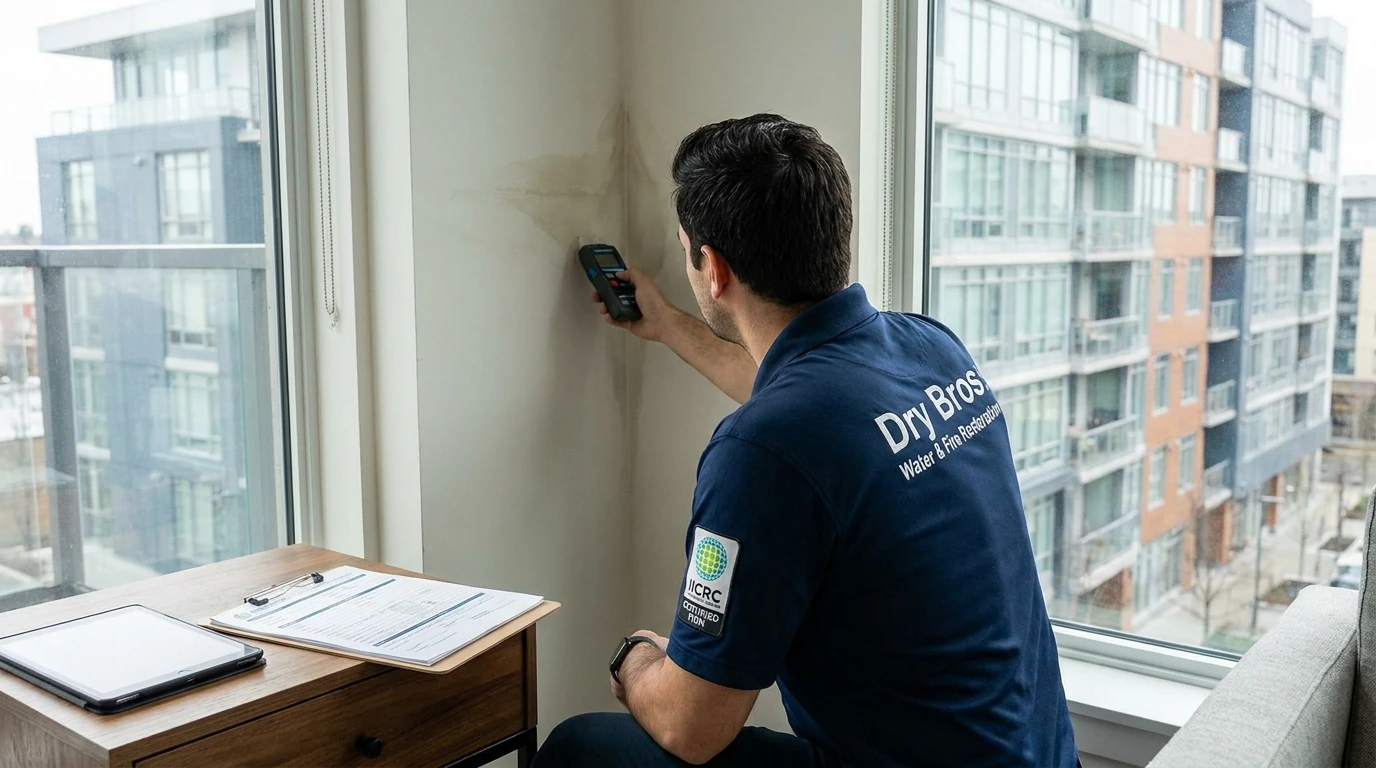
Act within the first 24 to 48 hours: notify your landlord or property manager in writing, document everything with photos, and start drying out what you can before mold has a chance to establish.
- Notify the landlord or building manager immediately, in writing (text or email), even if you also call. This creates a timestamp proving you reported the issue promptly, which protects your claim if mold shows up later.
- Photograph the damage before anything is moved or cleaned, including the ceiling stain, the wet flooring, and any belongings affected.
- Move and elevate belongings out of standing water where it’s safe to do so. Wet drywall and carpet left untreated past 24 to 48 hours is when mold growth typically begins, per industry drying guidelines.
- File a claim with your own renters insurer, get a claim number, and ask whether the loss is covered as sudden and accidental.
- Call a restoration crew for extraction and structural drying, especially in a multi-unit building where water has already traveled into the unit below. Our first-24-hours guide covers the full checklist in more detail, and it pairs well with our breakdown of how homeowners insurance handles water damage if you’re comparing coverage with a unit owner upstairs.
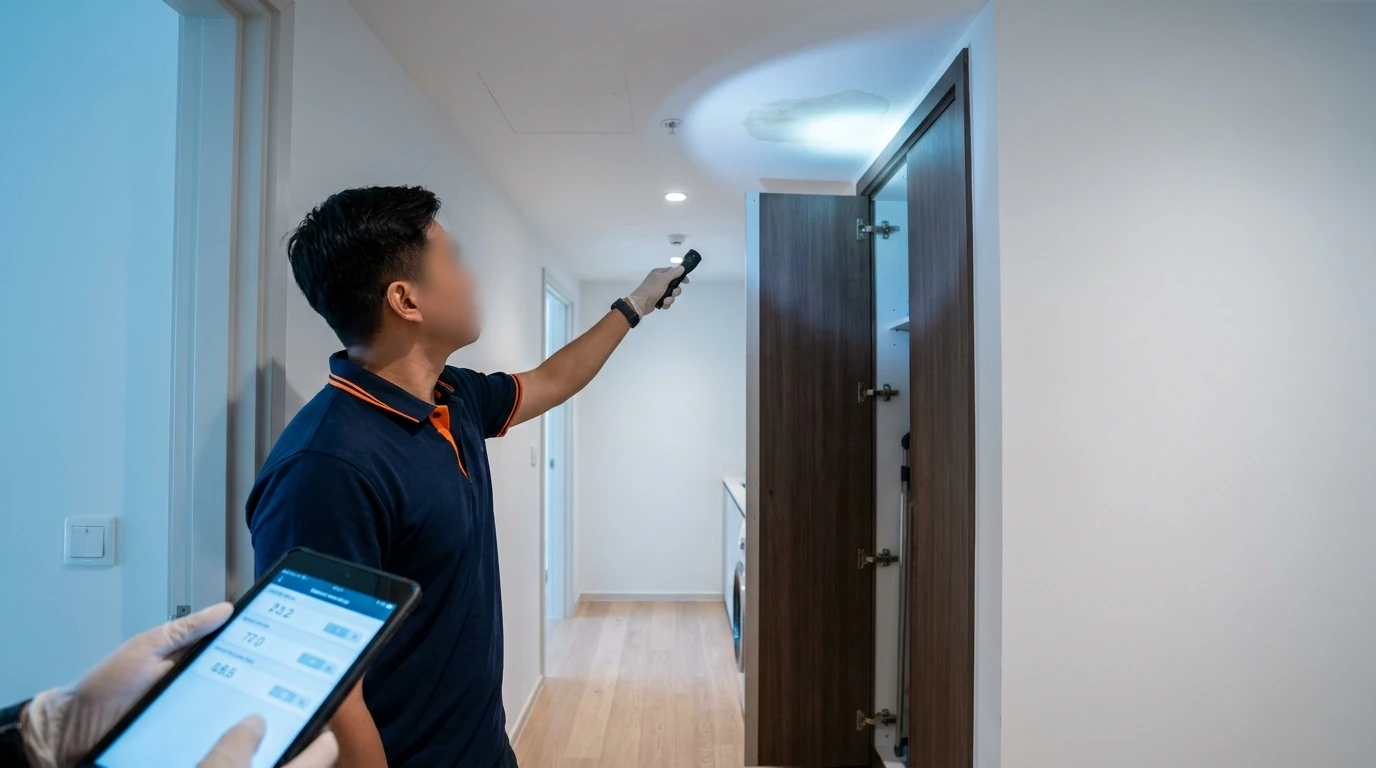
Getting a professional drying crew on-site quickly matters for your claim, not just your comfort. Documented moisture readings and a written drying log give your insurer, and the upstairs neighbor’s insurer if subrogation comes into play, the evidence that the loss was handled correctly and promptly.
If you’re dealing with standing water, a soaked ceiling, or a leak that’s already traveled between units in a Chicago building, Dry Bros Water & Fire Restoration can start extraction and drying while you sort out whose policy pays for what.
About Dry Bros Water & Fire Restoration
Dry Bros Water & Fire Restoration is a locally owned, licensed and insured restoration company serving Chicago, IL and the surrounding suburbs around the clock. Their crews handle water damage restoration, emergency water removal, burst pipe response, basement flooding cleanup, sewage cleanup, and mold remediation across Chicago two-flats, condo buildings, and single-family homes throughout the region.