Sewage Cleanup and Sanitization in Chicago
Sewage cleanup and sanitization in Chicago and surrounding areas. Insurance billing accepted. Call us now.
When a sewer line backs up, the water pooling in your basement or flooding your bathroom floor isn’t just water, it’s Category 3 contamination carrying fecal coliform bacteria, viruses, and pathogens that can colonize porous materials within hours. The smell hits first: that unmistakable sulfur-and-waste odor that soaks into drywall, subfloor, and insulation before most homeowners even realize the scope of what they’re dealing with. Sewage cleanup isn’t a mop-and-bleach job. It requires controlled removal, EPA-registered disinfectants, and verification testing to confirm the space is actually safe.
What sewage cleanup and sanitization actually involves
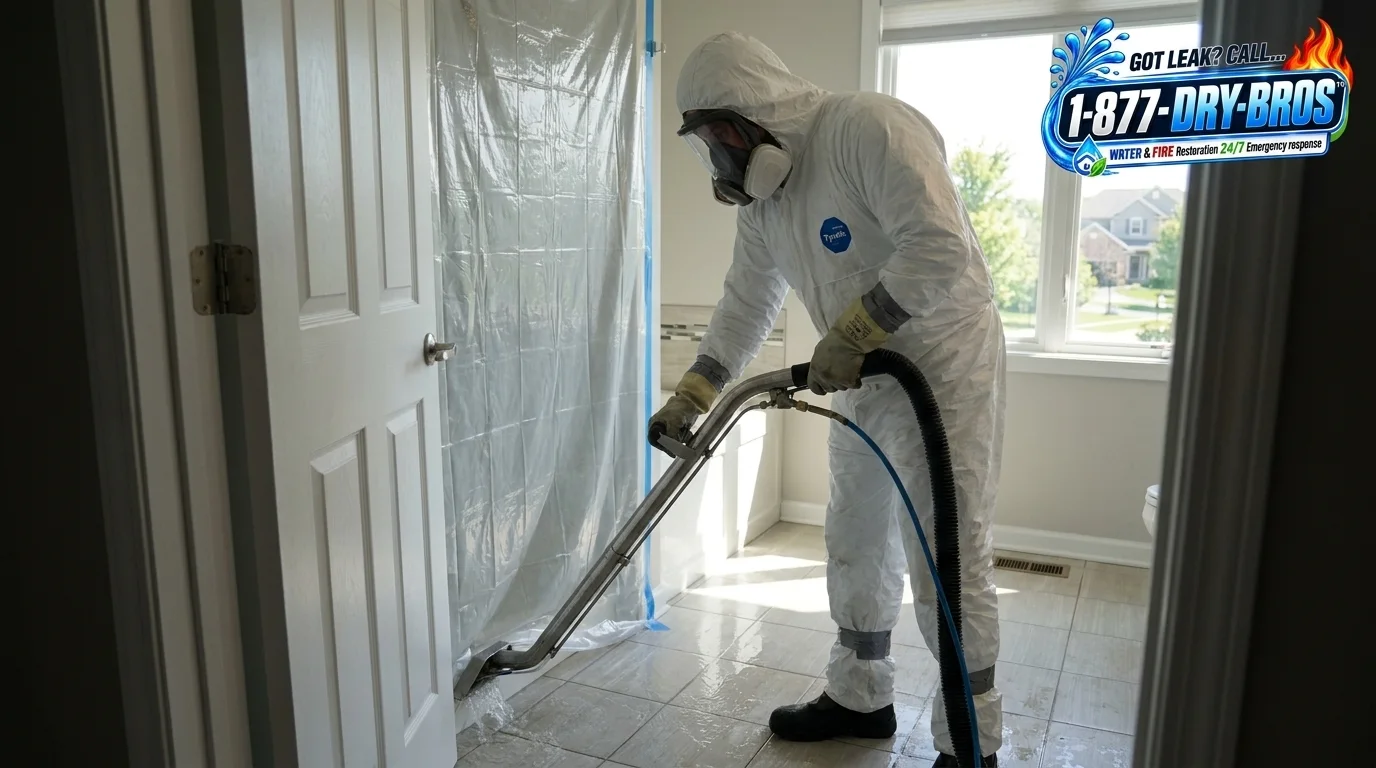
Raw sewage, whether from a backed-up municipal sewer line, a failed ejector pump, or a septic overflow, is classified as Category 3 (“black water”) under industry standards. That classification changes everything about how the work is done. Technicians enter the space in full PPE. Contaminated materials that can’t be adequately disinfected, drywall below the flood line, carpet padding, insulation, particleboard cabinetry, are removed and bagged for proper disposal rather than dried in place.
The sanitization phase uses EPA-registered antimicrobials applied to all affected hard surfaces, framing, and concrete. This isn’t a single wipe-down: contact time matters, and a proper application means letting the disinfectant dwell long enough to achieve the kill claims on the label. After disinfection, affected structural cavities are dried using commercial air movers and dehumidifiers, with moisture readings logged daily until the materials reach acceptable levels. The entire process typically runs three to five days for a contained basement backup, longer if structural materials were saturated for more than 24 hours before work began.
Our process
-
Containment and assessment. Before anything is moved, the affected zone is assessed for the extent of contamination, how far sewage traveled, which materials are saturated, and whether the backup source has been stopped at the line. Containment barriers go up to prevent cross-contamination to unaffected areas of the home.
-
Extraction and removal of contaminated material. Standing sewage is extracted using truck-mounted or portable units rated for black water. Porous materials below the contamination line, drywall, flooring, insulation, are removed, double-bagged, and disposed of in accordance with local waste handling requirements. Chicago’s combined sewer system means backups often carry street runoff as well as sanitary waste, which can introduce additional contaminants.
-
EPA-registered disinfection. All remaining hard surfaces, concrete floors, block walls, floor joists, PVC piping exteriors, are treated with hospital-grade, EPA-registered antimicrobials. Application follows the product’s required dwell time. A second pass is standard on surfaces that were submerged rather than splashed.
-
Structural drying and moisture verification. Commercial air movers and desiccant or refrigerant dehumidifiers run continuously until moisture readings in framing and concrete return to baseline. Readings are logged and documented, this record matters for both insurance claims and future real estate disclosure.
-
Clearance verification. Before containment comes down and reconstruction begins, affected surfaces are re-inspected. Any residual odor, which can indicate missed organic material, is addressed before the space is signed off.
What separates a good sewage response from a bad one
The most common mistake in sewage cleanup is treating it like a water damage job. Technicians who skip the Category 3 protocols, who extract the water, run some fans, and spray a surface disinfectant without removing saturated porous materials, leave pathogens behind inside wall cavities and under flooring. The space may look clean and smell acceptable for weeks before mold and bacterial growth make the problem visible again.
A second failure point is inadequate dwell time on disinfectants. Spraying and immediately wiping doesn’t achieve disinfection, it just moves contamination around. Proper application means the product stays wet on the surface for the full contact time specified on the EPA label.
Insurance adjusters reviewing sewage backup claims look for documentation of the contamination category, a material removal log, and moisture readings taken before and after drying. Without that paper trail, carriers have grounds to dispute whether the work was necessary or complete. A well-run sewage cleanup produces a job file that answers those questions before they’re asked.
What does sewage cleanup and sanitization cost?
Typical costs for sewage backup cleanup depend heavily on how much material was affected, how long the sewage sat before cleanup began, and whether the backup involved a finished or unfinished space. Most homeowners pay somewhere in the following ranges for professional remediation, these are industry-typical figures, not a quote from Dry Bros Water & Fire Restoration:
| Scenario | Typical range |
|---|---|
| Single bathroom backup, limited spread | $1,500 – $3,500 |
| Unfinished basement, partial flooding | $3,000 – $6,500 |
| Finished basement, drywall and flooring removal required | $6,000 – $15,000 |
| Multiple rooms or floors affected | $12,000 – $25,000+ |
| Septic overflow with yard and crawl space involvement | $8,000 – $20,000+ |
Every loss is different, and Dry Bros Water & Fire Restoration provides a written scope of work before any work begins. Homeowners insurance often covers sewage backup damage, but coverage depends on whether the policy includes a sewer backup endorsement, standard HO-3 policies frequently exclude it unless that rider was added. Reviewing your declarations page before filing is worth the five minutes.
Seasonal and regional considerations
Chicago’s combined sewer system, which carries both stormwater and sanitary waste in the same pipes, means heavy rain events directly increase the risk of sewer line backups throughout the city and inner-ring suburbs. Spring snowmelt and summer thunderstorms are the highest-risk periods. Older neighborhoods with clay tile sewer laterals, common in Chicago’s bungalow belt and two-flat corridors, are particularly vulnerable to root intrusion and line collapse that can trigger backups independent of weather.
Service area
Dry Bros Water & Fire Restoration serves Chicago and the surrounding metropolitan area, including communities throughout Cook, DuPage, Lake, and Will counties. Individual city and suburb pages detail local response logistics, find your area in the service directory.
If sewage has backed up into your home, the clock on contamination spread is already running. Call Dry Bros Water & Fire Restoration now to begin sewage backup cleanup and get a written scope before work starts.
Frequently Asked Questions
Does homeowners insurance cover sewage cleanup and sanitization?
What is Category 3 water, and why does it change how sewage cleanup is done?
How long does sewage smell last after cleanup, and what causes it to linger?
What should I do, and not do, while waiting for a sewage cleanup crew to arrive?
Does sewage cleanup require permits or inspections in Chicago?
Looking for the best sewage cleanup and sanitization company in Chicago?
Dry Bros Water & Fire Restoration provides sewage cleanup and sanitization in Chicago, IL and the surrounding area. We answer calls 24/7 — call (877) 379-2767 for immediate help.
Need Sewage Cleanup and Sanitization now?
We respond 24/7 across Chicago and surrounding IL cities.
Related Coverage
- Our Restoration Services
- Contact Dry Bros Water & Fire Restoration
- Sewage Cleanup and Sanitization in Berwyn
- Sewage Cleanup and Sanitization in Cicero
- Sewage Cleanup and Sanitization in Des Plaines
- Sewage Cleanup and Sanitization in Evanston
- Sewage Cleanup and Sanitization in Naperville
- Sewage Cleanup and Sanitization in Oak Park
- Sewage Cleanup and Sanitization in Skokie