Sewage Cleanup and Sanitization in Des Plaines
Sewage cleanup and sanitization in Des Plaines, IL. Insurance billing accepted. Call us now.
Our technicians are dispatched from our Chicago, IL headquarters and are typically on-site in Des Plaines within 60 minutes of your call.
Des Plaines sits at the confluence of the Des Plaines River and Salt Creek, and that geography matters the moment a sewer line backs up in your basement. The city’s combined sewer infrastructure, which carries both stormwater and sanitary waste in a single pipe, means that a hard rain can overwhelm the system and push raw sewage backward into homes across the city. When that happens, what’s on your floor isn’t just water. It’s Category 3 contamination: bacteria, viruses, and pathogens that require professional removal and sanitization, not a mop and a bottle of bleach. Dry Bros Water & Fire Restoration responds to exactly these situations, handling sewage backup cleanup and full sanitization so the space is safe to occupy again.
Why Des Plaines Properties See Sewage Backup Issues
The combined sewer system that serves much of Des Plaines is a known pressure point during heavy rainfall events. When stormwater volume spikes faster than the system can route it to the Metropolitan Water Reclamation District’s treatment infrastructure, the path of least resistance is often back through floor drains, toilets, and utility sink connections in lower-level spaces. Basements in the older residential corridors near the downtown Metra station and along Oakton Street tend to sit low relative to grade, making them especially vulnerable during the spring thaw and the intense summer thunderstorms the Chicago metro sees regularly.
Homes built before the 1970s, and Des Plaines has a substantial number of them, frequently have clay tile lateral sewer lines connecting the house to the municipal main. Clay tile is durable until it isn’t: tree root intrusion, ground settlement, and decades of use cause cracks and offsets that let groundwater in and create the blockages that produce backups. A blockage in the lateral is a property-owner responsibility, not the city’s, which means the cleanup and the pipe repair both land on the homeowner.
Our Sewage Cleanup and Sanitization Process in Des Plaines
Sewage cleanup follows a strict sequence because cutting corners at any step leaves contamination behind that isn’t visible to the eye.
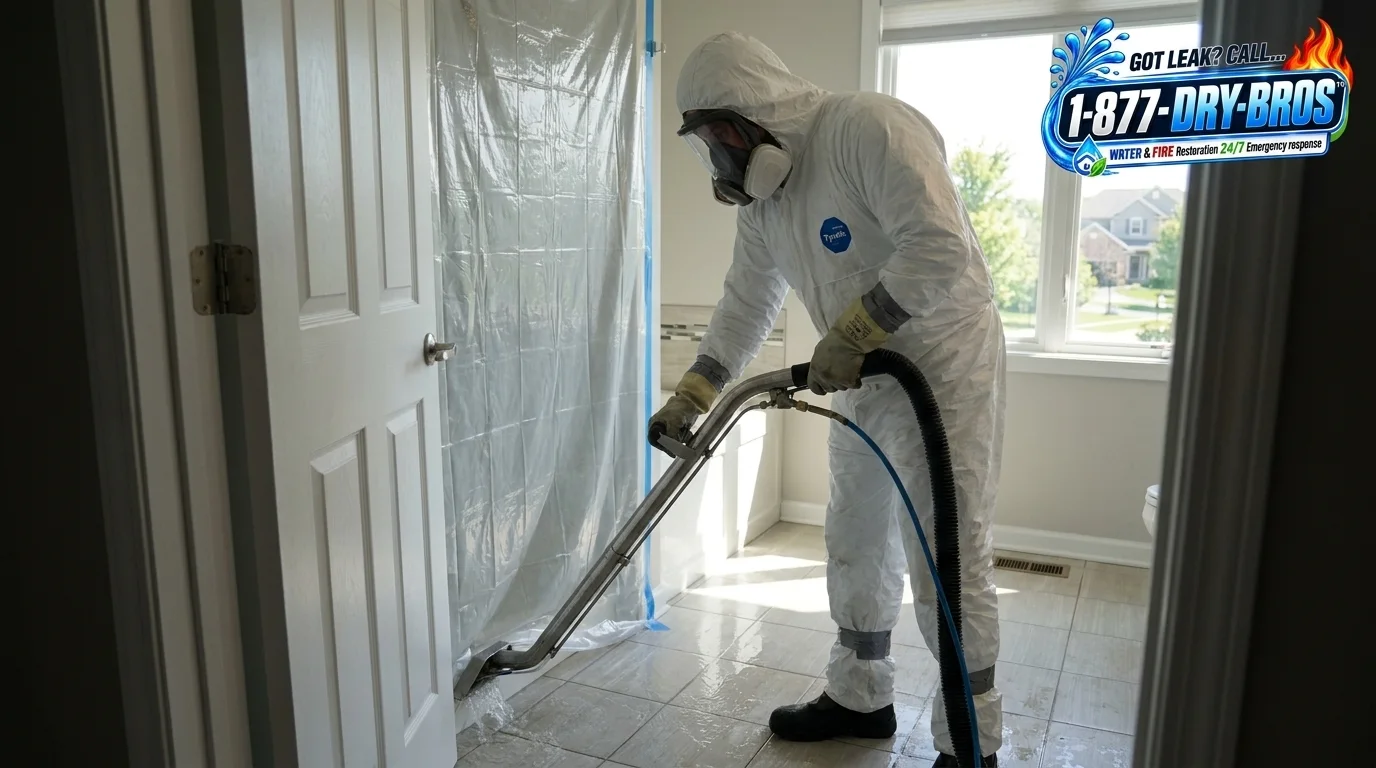
Containment first. Affected areas are isolated to prevent cross-contamination to living spaces. If the backup reached finished drywall or wood framing, those materials are assessed for removal, porous materials that have absorbed Category 3 water cannot be dried and kept; they have to come out.
Extraction and solid waste removal. Standing sewage is extracted using truck-mounted equipment. Solid waste and contaminated debris are bagged, labeled, and disposed of in compliance with Illinois EPA guidelines for biohazardous waste, not hauled to a standard landfill.
Structural drying. Once the bulk contamination is removed, the drying phase begins. In Des Plaines winters, cold ambient temperatures slow evaporation significantly; we account for that with heated drying equipment rather than relying on ambient air movement alone.
Antimicrobial treatment and sanitization. Every surface that contacted sewage, concrete floors, block walls, floor joists, subfloor, is treated with EPA-registered antimicrobial agents. This step addresses pathogens that extraction alone doesn’t eliminate.
Documentation. We photograph and document each phase, which matters when you’re filing a claim with your homeowner’s insurance or a sewer backup rider.
Reaching Des Plaines from Chicago
Dry Bros operates out of Chicago, and Des Plaines is a straightforward run northwest via I-90/94 to I-294 or directly up I-90 to the Des Plaines exits. Depending on traffic patterns, and the Kennedy can be unpredictable during peak hours, the drive to addresses near Mannheim Road or the central downtown corridor is typically under 30 minutes outside of rush windows. For scheduling, call us now and our team will give you an honest arrival estimate based on current conditions rather than a number that sounds good on paper.
Insurance Coordination for Des Plaines Sewage Claims
Standard homeowner’s insurance policies in Illinois often exclude sewer backup damage unless the homeowner has added a sewer backup endorsement, a separate rider that many Des Plaines residents carry precisely because the combined sewer risk is well known locally. If you have that coverage, we document the loss thoroughly: photos of affected materials before removal, moisture readings, waste extraction logs, and a written scope of work. That documentation goes to your adjuster directly, which reduces back-and-forth and keeps the claim moving. If you’re not sure whether your policy includes sewer backup coverage, your carrier’s declarations page will show it as a line item.
Local Note
Des Plaines has an active basement flooding protection program administered through the city that offers reimbursement assistance for homeowners who install overhead sewers, backwater valves, or sump systems, infrastructure that can prevent future backups even if it doesn’t help with the current one. It’s worth a call to the city’s Public Works department after the immediate cleanup is done. We can note in our documentation that a backwater valve was absent, which sometimes supports both the insurance claim and the city program application.
If your basement is dealing with sewage backup right now, the longer contaminated water sits, the deeper it migrates into concrete and framing. Call Dry Bros at call us now, we’ll walk you through what to do before we arrive and get a crew moving toward Des Plaines.
Sewage Cleanup and Sanitization in Des Plaines: Service Coverage
Frequently Asked Questions
How fast can you arrive for sewage cleanup and sanitization in Des Plaines?
Does Des Plaines's combined sewer system make sewage backups more likely than in other Chicago suburbs?
My Des Plaines home was built in the 1950s, does the age of the house affect how sewage cleanup is handled?
Does Des Plaines require any permits or inspections for sewage cleanup and pipe repair work?
What does the sanitization step actually involve, and how do I know the space is safe afterward?
If I have a sewer backup endorsement on my Des Plaines homeowner's policy, how does the claims process work?
Will my homeowners insurance cover sewage cleanup and sanitization in Des Plaines?
Sewage Cleanup and Sanitization response in Des Plaines
Most Des Plaines calls see a technician on-site within 60 minutes from our Chicago headquarters.