Smoke Damage Restoration in Evanston
Smoke damage restoration in Evanston, IL. Insurance billing accepted. Call us now.
Our technicians are dispatched from our Chicago, IL headquarters and are typically on-site in Evanston within 60 minutes of your call.
Evanston’s dense mix of century-old brick two-flats, Victorian-era single-families, and mid-rise condominiums means a kitchen fire or electrical fault doesn’t just scorch the room where it starts, smoke migrates through balloon-frame wall cavities, settles into plaster, and works its way into shared HVAC chases before the fire department has packed up the hose. If you’re dealing with smoke residue in an Evanston home right now, the clock on secondary damage is already running. Call Dry Bros Water & Fire Restoration now.
Why Evanston Properties See Smoke Damage Differently
Evanston’s housing stock skews old. A large share of single-family homes and two-flats were built before 1950, many using balloon-frame construction, a method where wall studs run continuously from foundation to roofline with no fire-blocking between floors. In a fire, that open cavity acts like a chimney, pulling smoke and soot from the point of origin through the entire wall system. You can wipe down the kitchen and still find oily residue coating the inside of plaster walls two floors up.
Older plaster itself is part of the challenge. Unlike modern drywall, which can be cut out and replaced relatively quickly, historic plaster walls in Evanston homes absorb smoke odor compounds deep into the substrate. Surface cleaning alone won’t eliminate the smell, the underlying lath and plaster may need chemical treatment, encapsulation, or selective removal to fully address odor at the source.
The city’s proximity to Lake Michigan also plays a role. Evanston’s humidity patterns, especially in spring and fall, slow the off-gassing of smoke residue and can reactivate odors that seemed resolved after a dry stretch. Restoration work done without accounting for that moisture dynamic often results in odors returning weeks later.
Our Smoke Damage Restoration Process in Evanston
Smoke damage restoration is not a single task, it’s a sequence that has to follow the chemistry of combustion byproducts, not just the visible stain.
The process starts with a thorough assessment of how far smoke has traveled. In Evanston’s older homes, that means probing wall cavities, checking attic spaces, and testing HVAC ductwork, not just evaluating the room where the fire occurred. Soot is acidic, and on plaster, brick, and metal surfaces it begins etching and corroding within hours of a fire.
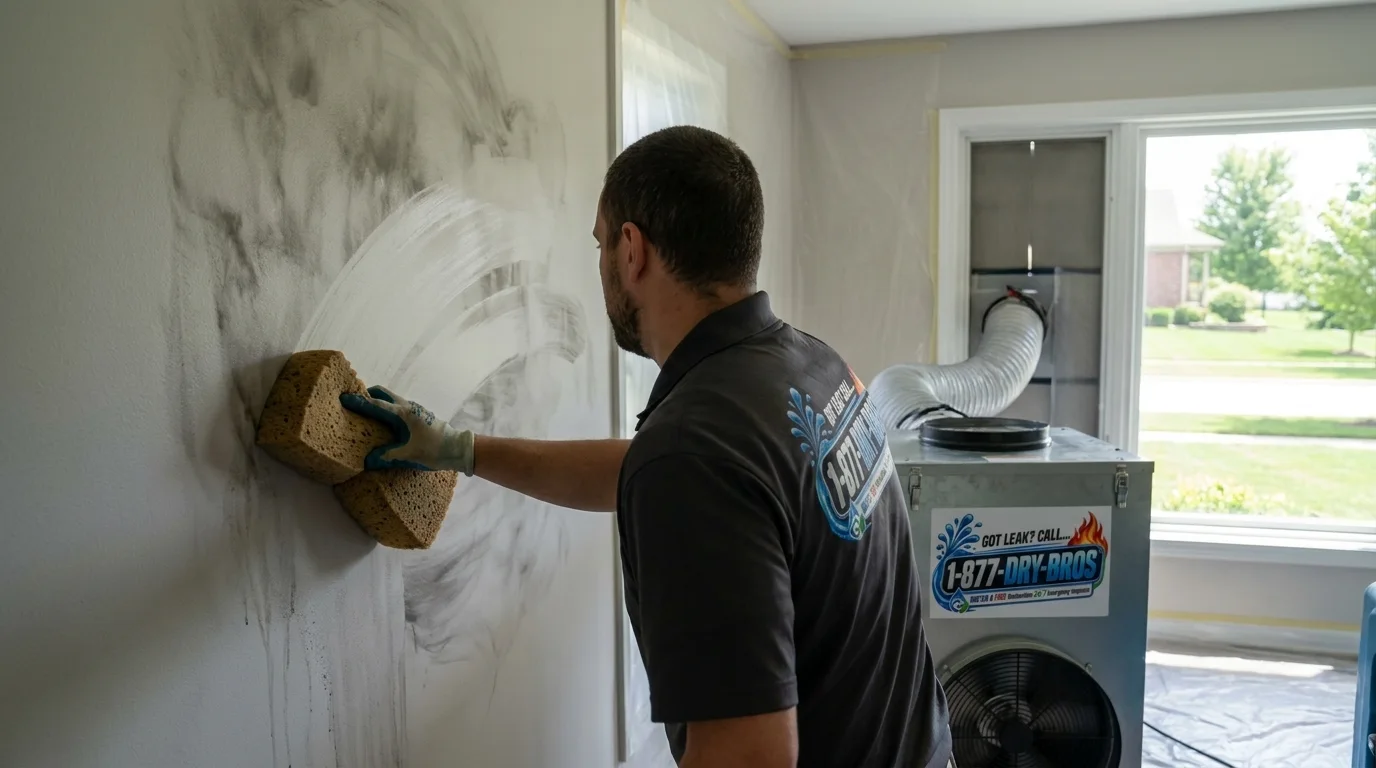
From there, the work moves through dry soot removal using HEPA-filtered vacuums and chemical sponges before any wet cleaning, applying water or cleaning solution to dry soot first drives it deeper into porous surfaces. Wet cleaning follows with appropriate alkaline or dry-cleaning solvents matched to the surface type. Structural materials that can’t be adequately cleaned are documented for removal and replacement.
Odor control is handled with thermal fogging or hydroxyl generation, depending on the scope and occupancy status of the structure. Air scrubbers with activated carbon filtration run continuously during the process. Final clearance is based on odor testing and visual inspection, not a fixed number of days.
Evanston Insurance Coordination
Smoke damage claims in Evanston typically fall under the fire damage provisions of a standard homeowner’s policy, but the documentation requirements matter. Carriers want itemized scope-of-loss reports, photo documentation of affected materials before any cleaning begins, and written justification for structural removal decisions.
Dry Bros documents the loss from the first site visit, photographing soot migration paths, affected contents, and structural conditions, so the claim file is built as the work proceeds rather than reconstructed after the fact. We work directly with adjusters and can provide the scope-of-loss format most carriers require for review.
For Evanston condo owners, the picture is more complicated. Depending on your building’s declaration, smoke damage to shared HVAC systems or common-area walls may fall under the HOA’s master policy rather than your individual unit policy. We can help you identify which materials fall under which coverage before work begins.
Local Note
In Evanston’s older neighborhoods, many homes still have original cast-iron radiator systems with decades of paint layers on the radiator fins. After a fire, those fins trap soot in ways that standard wiping won’t address, and when the heat comes back on in fall, the radiators essentially bake the residue into the room air all over again. It’s a detail that gets missed on a surface-level walkthrough but shows up unmistakably the first cold night of the season. Thorough smoke damage restoration in these homes includes the radiators, not just the walls and ceilings.
If you’re in an Evanston home with original steam heat and you’ve had a fire, even a small one, make sure your restoration team accounts for the heating system before closing out the job. Call us now to schedule an assessment that covers the full scope of how smoke moves through your specific structure.
Smoke Damage Restoration in Evanston: Service Coverage
Frequently Asked Questions
How fast can you arrive for smoke damage restoration in Evanston?
How does Evanston's older housing stock affect the timeline for smoke damage restoration?
Does Evanston's proximity to Lake Michigan affect smoke odor after a fire?
I own a condo in Evanston, how do I know whether smoke damage is covered by my policy or the building's master policy?
What surfaces are most commonly missed during smoke residue cleanup in Evanston homes?
How does Dry Bros document smoke damage for an insurance claim in Evanston?
Smoke Damage Restoration response in Evanston
Most Evanston calls see a technician on-site within 60 minutes from our Chicago headquarters.