Burst Pipe Cleanup and Repair in Chicago
Burst pipe cleanup and repair in Chicago and surrounding areas. Insurance billing accepted. Call us now.
A pipe can hold for decades and then fail in minutes, and the water doesn’t wait. Whether it’s a supply line that split overnight in a cold utility room or a pressurized main that let go behind a finished wall, the first hour after a burst pipe determines how much of your home you’ll need to rebuild. Water from a broken supply line moves fast: it saturates drywall in under an hour, reaches floor joists and subfloor within a few hours, and can begin supporting mold growth within 24 to 48 hours of the initial event.
What burst pipe cleanup and repair actually involves
Burst pipe cleanup is not the same as mopping up a spill. The visible puddle on your floor is rarely the full picture. Water from a pressurized line travels along framing cavities, under flooring, and inside wall assemblies, often pooling in places you can’t see and wouldn’t think to look. A thorough pipe break water damage response means tracing where the water went, not just where it stopped.
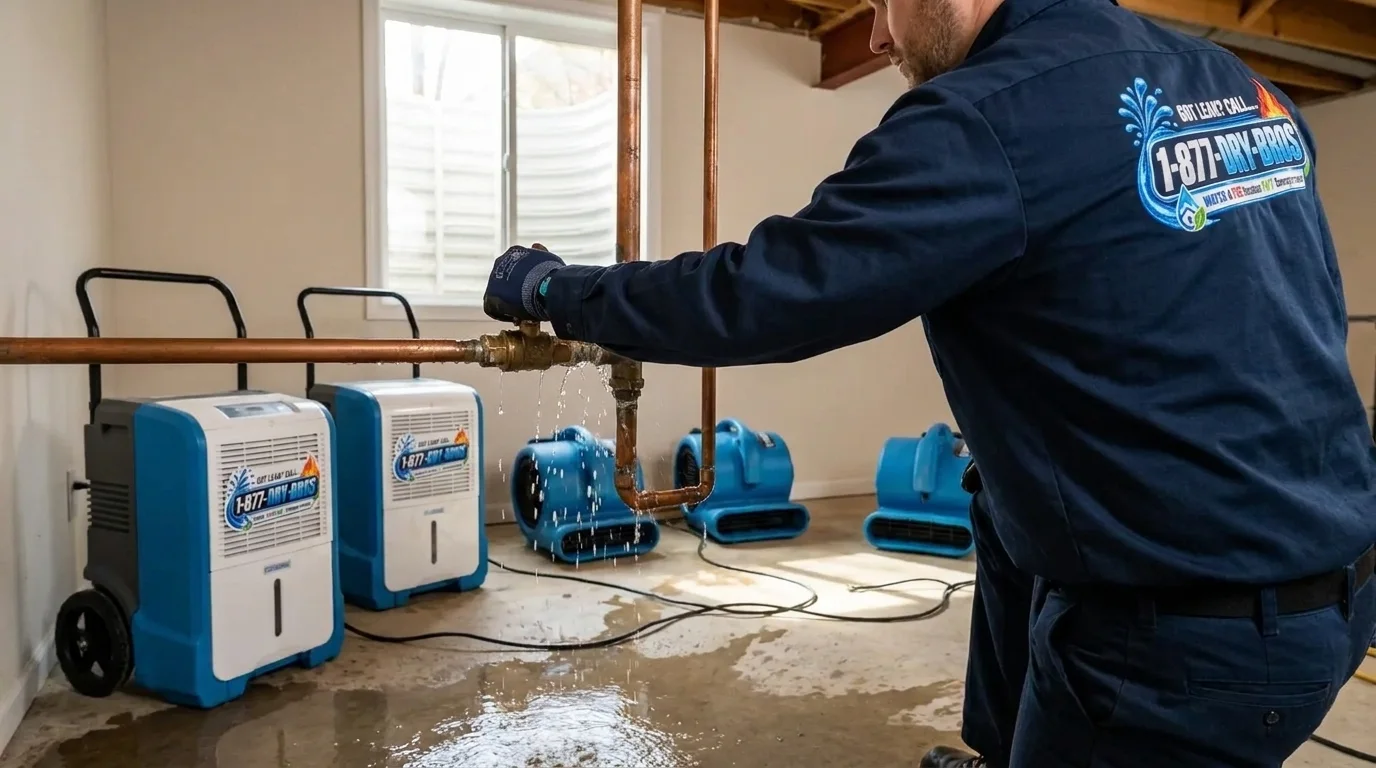
The work involves industrial extraction equipment to pull standing water from hard and soft surfaces, followed by a drying phase using high-capacity air movers and refrigerant or desiccant dehumidifiers sized to the affected area. Moisture readings are taken with non-invasive meters and thermal imaging cameras to map saturation behind walls and under flooring without unnecessary demolition. When materials are too wet to dry in place, saturated drywall, buckled hardwood, soaked insulation, controlled demolition is performed to expose cavities and allow airflow to reach the structure.
Timeline depends on the category of water (clean supply line vs. water that has contacted sewage or contaminants), the construction materials involved, and how long the water sat before extraction began. Structural drying typically runs several days, with daily moisture readings confirming progress toward established drying goals before equipment is removed.
Our process
-
Source control and safety assessment. Before cleanup begins, the broken pipe or water line needs to be isolated. We confirm the supply is shut off, assess whether any electrical panels or outlets are in the affected zone, and document the source of the loss for the insurance claim file.
-
Water extraction and initial moisture mapping. Industrial truck-mount or portable extractors remove standing water from all affected surfaces. Thermal imaging and calibrated moisture meters establish a baseline map of saturation, walls, floors, ceilings, and any adjacent spaces the water may have migrated into.
-
Controlled demolition where necessary. Wet drywall, insulation, and flooring that cannot dry in place are removed to expose framing and allow air circulation. Flood cuts are made at a height that keeps unaffected material intact while giving drying equipment access to the wall cavity.
-
Structural drying with daily monitoring. Air movers and dehumidifiers are placed according to the moisture map. Readings are logged daily, or more frequently on large losses, and equipment is adjusted as materials dry. Drying is not declared complete until readings reach acceptable levels across all monitored points.
-
Repair and reconstruction scope. Once the structure is dry and documented, the repair phase begins: replacing drywall, insulation, flooring, and any finish materials removed during the mitigation phase. A written scope of work is provided before any reconstruction starts.
What separates a good burst pipe response from a bad one
The most common mistake in water line break cleanup is declaring the job done based on surface readings alone. Moisture meters pressed against painted drywall can show acceptable numbers while the paper backing and the framing behind it remain saturated. Experienced crews use penetrating probes and thermal imaging together, not one or the other.
A second frequent problem is under-sizing the drying equipment. The number of air movers and dehumidifiers required is calculated based on the volume of the affected space and the materials involved, not eyeballed. Pulling equipment too early, before verified drying goals are met, is the most direct path to a mold problem that surfaces weeks later.
Insurance adjusters reviewing burst pipe cleanup claims look for a documented drying log: daily moisture readings at consistent measurement points, equipment placement records, and photos of conditions at each stage. Without that documentation, supplements and secondary claims become difficult to support. A thorough claim file protects the homeowner as much as it protects the contractor.
What does burst pipe cleanup and repair cost?
Typical costs for burst pipe cleanup and repair vary significantly based on how much water was released, how long it sat, what materials were affected, and whether reconstruction is needed. Most homeowners pay somewhere in the ranges below, these are industry-typical figures, not quotes from Dry Bros Water & Fire Restoration.
| Scenario | Typical range |
|---|---|
| Single room, clean water, no demolition needed | $1,200 – $3,500 |
| Single room with flood cut and drywall replacement | $3,000 – $6,500 |
| Multi-room loss, finished basement or two floors affected | $6,000 – $18,000 |
| Hardwood floor replacement (per room) | $3,500 – $9,000 |
| Full reconstruction after major supply line failure | $15,000 – $40,000+ |
Every loss is different, and Dry Bros Water & Fire Restoration provides a written scope of work before any work begins. Homeowners insurance typically covers sudden and accidental pipe break water damage, including both the mitigation and the reconstruction, though coverage for the pipe repair itself varies by policy.
Seasonal and regional considerations
Chicago’s winters are the leading cause of burst pipe claims in the region. When temperatures drop sharply, particularly during the hard freezes that hit the city in January and February, pipes in exterior walls, unheated crawl spaces, and garage-adjacent utility rooms are most vulnerable. Older two-flats and greystones throughout neighborhoods like Logan Square, Pilsen, and Bridgeport often have plumbing routed through exterior walls in ways that weren’t designed for modern insulation standards, making them especially susceptible during prolonged cold snaps.
Spring thaw brings a secondary wave of losses: pipes that cracked under freeze pressure but didn’t fully fail until water pressure returned. If your home had a hard freeze and you noticed reduced water pressure afterward, that’s worth investigating before the pipe finishes failing.
Service area
Dry Bros Water & Fire Restoration serves Chicago and the surrounding communities throughout the metro area, including the North Shore, the western suburbs, the south side, and surrounding Cook County neighborhoods. Each city-specific page covers local considerations in more detail, find your area in the service map or call directly.
If you’re standing in a wet room right now, the fastest next step is a call to call us now. Dry Bros will walk you through what to do before the crew arrives, document the loss from the first visit, and give you a written scope before any work begins. Call now to schedule your moisture assessment.
Frequently Asked Questions
Does homeowners insurance cover burst pipe cleanup and repair?
How long does structural drying take after a burst pipe?
What should I do immediately after a pipe bursts, before the crew arrives?
Can wet drywall always be dried in place, or does it have to come out?
How do you find water damage inside walls without tearing everything open?
Looking for the best burst pipe cleanup and repair company in Chicago?
Dry Bros Water & Fire Restoration provides burst pipe cleanup and repair in Chicago, IL and the surrounding area. We answer calls 24/7 — call (877) 379-2767 for immediate help.
Need Burst Pipe Cleanup and Repair now?
We respond 24/7 across Chicago and surrounding IL cities.
Related Coverage
- Our Restoration Services
- Contact Dry Bros Water & Fire Restoration
- Burst Pipe Cleanup and Repair in Berwyn
- Burst Pipe Cleanup and Repair in Cicero
- Burst Pipe Cleanup and Repair in Des Plaines
- Burst Pipe Cleanup and Repair in Evanston
- Burst Pipe Cleanup and Repair in Naperville
- Burst Pipe Cleanup and Repair in Oak Park
- Burst Pipe Cleanup and Repair in Skokie