TL;DR: A water-damaged ceiling needs the leak source stopped first, then a check for sag, sponginess, or dripping before you touch anything. A dry, firm ceiling with only a yellow-brown stain can usually be sealed with a stain-blocking primer and repainted. A ceiling that’s soft, bulging, or still wet has absorbed enough water to lose its structural strength, and that section has to be cut out, dried, and replaced, usually with a mold check first.
If you’re staring up at a brown ring spreading across your ceiling right now, maybe from an upstairs bathroom, a roof leak, or a neighbor’s unit in an Evanston two-flat or courtyard building, the first question isn’t how to patch it. It’s whether the water is still coming and whether that ceiling is safe to stand under. Evanston’s housing stock skews older than much of the North Shore, and a lot of it still has original plaster-and-lath ceilings instead of drywall. Plaster holds water differently than drywall, and that changes what “fixing it” actually looks like.
How do you fix water damage on a ceiling?
You fix ceiling water damage by stopping the water source, letting the area dry completely, then repairing only the material that’s actually been compromised, not just repainting over it. Skipping the drying step is the single most common mistake, because paint and new drywall mud trap moisture against wood framing, where it feeds mold you can’t see.
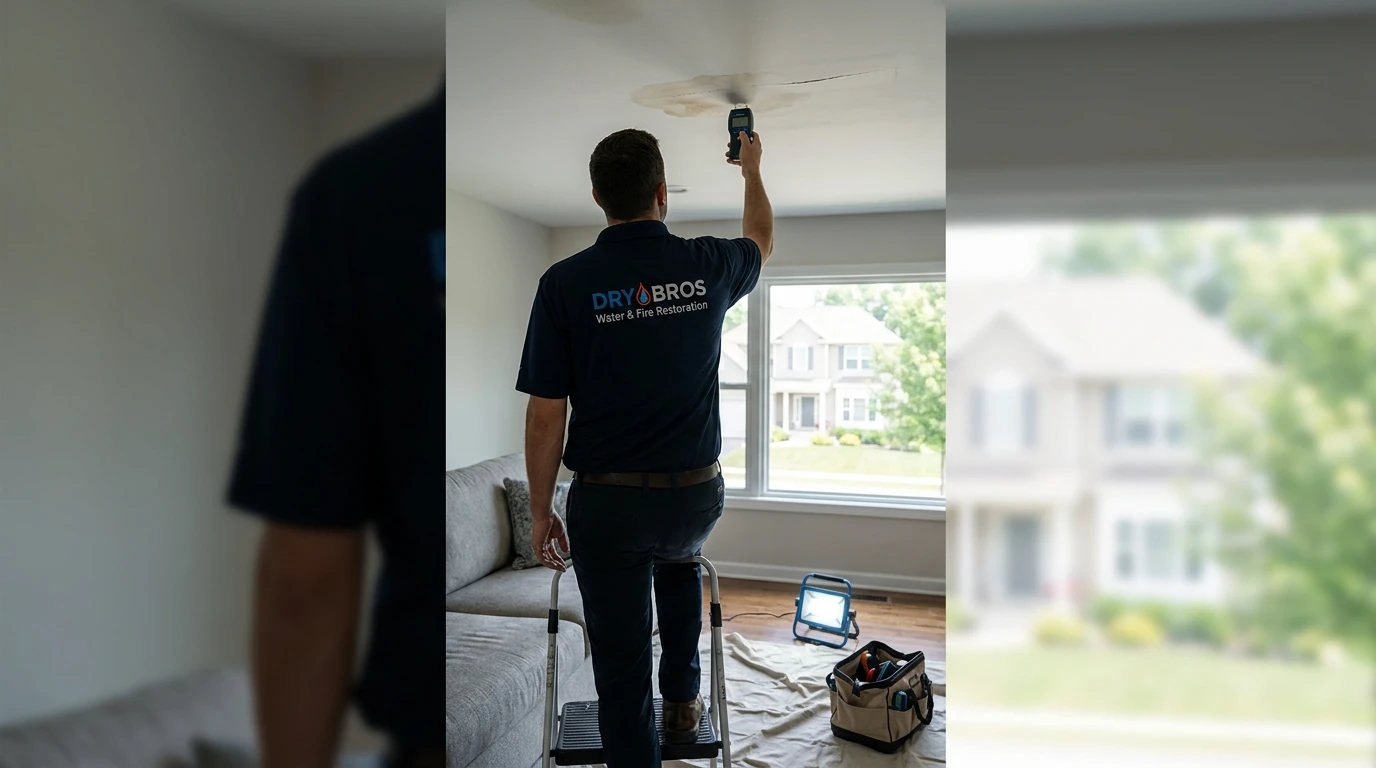
The order matters: find and stop the source (a supply line, a roof flashing failure, an upstairs tub overflow), confirm the area around and above the stain is dry with a moisture meter, then repair. A contractor or restoration crew checking moisture content in the drywall or plaster, and in the framing above it, is the step most DIYers skip, and it’s the step that determines whether the repair holds or you’re back up a ladder in three months with a new stain.
Is a sagging or soft ceiling about to collapse?
A ceiling that sags, feels spongy when you press it, or drips when touched has absorbed water beyond what it can hold, and it can fail without warning. Treat any of those signs as a stay-out-of-the-room situation until the material is removed or an inspector confirms the framing is sound.
Water adds significant weight to drywall and especially to plaster, which is a heavier, denser material made of lime or gypsum troweled over wood lath strips. A plaster ceiling that’s absorbed a full bathtub overflow or a slow roof leak over several days can hold many pounds of water per square foot before it ever shows a visible bulge. In Evanston’s older buildings near Northwestern and in the historic districts along Ridge Avenue, original lath-and-plaster ceilings are common in homes built before the 1950s, and that lath can rot and let go of the plaster keys holding the ceiling up, sometimes suddenly.
If you see:
- A visible bulge or dip in the ceiling plane
- Cracking that radiates outward from the stain
- A soft spot when lightly pressed with a gloved hand
- Active dripping
clear the room, put a bucket under the worst spot if it’s still actively leaking, and treat the ceiling as structurally compromised until someone qualified has looked at it. This is one of the few restoration situations where “wait and see” is the wrong call.
Should you patch the stain or tear out the drywall?
A stain-only repair is appropriate when the ceiling material is dry, firm, and shows no sag, cracking, or odor; anything wet, soft, or discolored with a musty smell needs to come out. The deciding factor isn’t how the stain looks, it’s what a moisture meter reads and how the material feels when touched.
For the stain-only case: let the area dry fully (this can take several days depending on ventilation), apply a stain-blocking, mold-inhibiting primer (not regular ceiling paint, which won’t stop the tannins from bleeding back through), then repaint to match. This works for a one-time, quickly stopped leak where the water never saturated through.
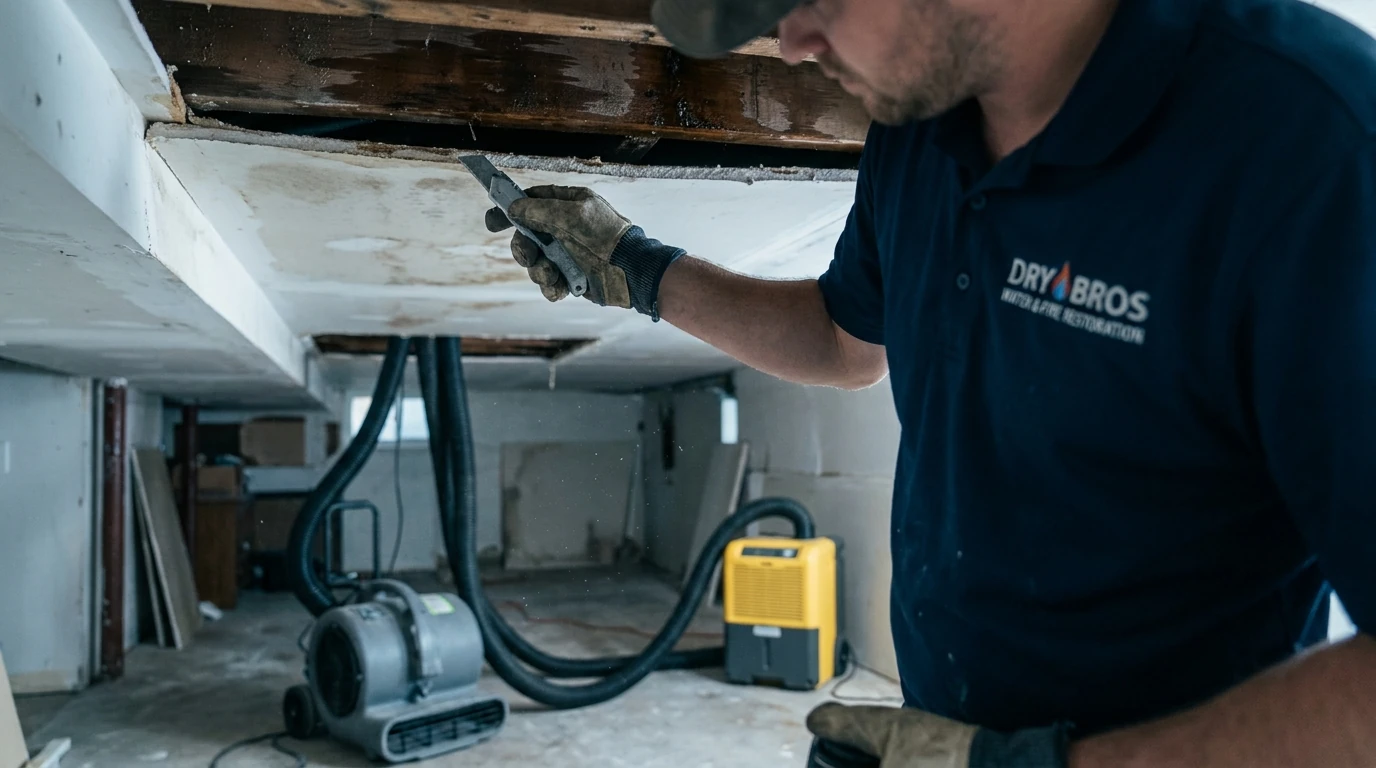
For saturated material: the wet drywall or plaster section gets cut out back to dry framing, the cavity gets dried with air movers and a dehumidifier until moisture readings return to normal, and only then does new drywall go up. If the water sat for more than 24 to 48 hours, or if you can smell must, check for hidden growth before closing the ceiling back up; our guide to spotting hidden mold covers what to look for beyond a visible stain. The EPA’s guidance on mold and moisture is a useful reference for why this step isn’t optional.
Drying to the industry benchmark matters here. The IICRC S500 standard for water damage restoration is what professional crews use to confirm a structure is actually dry, not just dry to the touch, before closing it back up.
What should you do if the ceiling damage came from upstairs or a burst pipe?
Start by identifying whether the source is still active, since repairing a ceiling while the leak continues wastes time and money. If the water came from an upstairs unit, your own roof, or a supply line in a wall above the ceiling, that source has to be fixed or shut off before any ceiling work begins, and in multi-unit buildings that often means coordinating with a neighbor or a building manager.
If a pipe burst is the cause, our burst pipe emergency checklist walks through shutting off the water main and documenting the damage for insurance before repairs start. Water from an upstairs neighbor or a shared building system is also one of the more common disputes homeowners run into with claims, since fault and coverage can depend on whether the source was sudden (a supply line failure) or gradual (a slow, long-term leak); our guide on what to do in the first 24 hours after water damage covers the documentation that protects a claim either way.
Once the source is confirmed stopped, a moisture assessment of the ceiling, the framing above it, and any adjoining walls tells you the real scope before a single patch goes on. Dry Bros Water & Fire Restoration handles that assessment and the water damage restoration work that follows for homes across Evanston and the North Shore, including burst pipe repair when a failed line is the source.
A ceiling stain that looks small from the floor can mean a much larger wet area above it. Getting a moisture reading before you patch anything is the cheapest insurance you can buy against redoing the work in a few months.
About Dry Bros Water & Fire Restoration
This guide was prepared with the Dry Bros Water & Fire Restoration team, led by Amin Mashouf. Dry Bros is a licensed and insured, locally owned restoration company based in Chicago, IL, serving Evanston and the surrounding North Shore and western suburbs with 24/7 emergency response. Their crews handle water damage restoration, burst pipe repair, flood cleanup, and mold remediation across homes and multi-unit buildings in the region.
Need help now? Call Dry Bros Water & Fire Restoration at (877) 379-2767.