TL;DR: In Illinois, water damage restoration typically runs $1,300 to $5,000 for a contained clean-water loss and $7,000 to $20,000 or more when sewage, category 3 water, or multiple rooms are involved. The biggest cost drivers are how much water intruded, what materials got wet, and how long the water sat before extraction started.
If you’re standing in a wet basement in Cicero or looking at a stained ceiling in a Chicago two-flat, the number you actually want is a dollar figure, not a lecture. Here’s what homeowners and property managers across Illinois typically pay for water damage restoration, what changes the price, and how insurance usually factors in.
How Much Does Water Damage Restoration Cost in IL?
Most Illinois homeowners pay between $1,300 and $5,000 for a standard clean-water loss affecting one or two rooms, and $7,000 to $20,000 or more when sewage backup, flooding, or extensive structural drying is involved. The final number depends on the water’s source, how many square feet got wet, and whether drywall, flooring, or framing need to be removed and rebuilt.
Those ranges hold across the Chicago metro, from lakefront condos in Evanston to older bungalows on the South Side to newer construction in Naperville. Housing age matters here: a lot of Chicago-area housing stock has plaster walls, older subfloors, or finished basements below grade, and all three add labor time compared to a newer build with open-stud construction.
Typical Water Damage Restoration Costs in Illinois
| Scenario | Typical Cost Range |
|---|---|
| Small bathroom or laundry leak, clean water, under 100 sq ft | $1,300 - $2,800 |
| Single room, clean water (Category 1), around 300 sq ft | $2,500 - $5,000 |
| Basement flooding from sump failure or heavy rain (Category 2) | $5,000 - $12,000 |
| Sewage backup or gray/black water (Category 3), multiple rooms | $7,000 - $20,000 |
| Structural drying with drywall, insulation, and flooring replacement | $15,000 - $50,000+ |
| Large commercial or multi-unit loss | Scoped individually |
These are typical industry ranges for Illinois, not a quote. Every loss is different, and Dry Bros Water & Fire Restoration provides a written scope of work before any repair begins.
What Drives the Cost of Water Damage Restoration?
The water’s category and how long it sat are the two factors that move the price the most, followed by square footage and the materials affected. A same-day clean-water response costs far less than a three-day-old Category 3 loss.
Category and class of water. The IICRC S500 standard classifies water losses by contamination level: Category 1 is clean water (a supply line break), Category 2 is gray water (a washing machine overflow), and Category 3 is grossly contaminated water (sewage backup, floodwater). Higher categories require more demolition, more disposal, and more disinfection, which raises cost.
Response time. Drywall, carpet pad, and subfloor start absorbing moisture within hours. A loss caught and mitigated the same day usually needs less material removal than one sitting untreated for two or three days, when mold growth becomes a real risk.
Square footage and materials. Hardwood floors, plaster walls, and finished basements cost more to dry and repair than carpet over concrete. A one-room bathroom leak and a whole-basement flood from a Chicago combined-sewer backup during a heavy storm are not the same job, even though both start as “water damage.”
Access and layout. A walkout basement dries faster and costs less to service than a below-grade basement with limited exterior access, which is common in older Cicero and Berwyn housing stock.
If you’re not sure which category applies to your situation, our burst pipe emergency checklist walks through how to assess a fresh loss before a crew arrives.
Will Insurance Cover the Cost?
Most standard homeowners insurance policies cover sudden, accidental water damage, like a burst pipe or a failed water heater, but exclude gradual leaks and, in most cases, exclude surface flooding unless you carry separate flood coverage. Sewer and sump pump backup usually requires a specific endorsement.
That distinction matters a lot in Illinois. Chicago and many of its older suburbs run combined sewer systems that can back up into basements during heavy rain, and that kind of loss is often excluded from a standard policy unless you added a sewer backup rider. The Federal Emergency Management Agency administers the National Flood Insurance Program for homeowners in flood-prone areas who want separate flood coverage.
Deductibles on covered water losses typically run $500 to $2,500. What actually protects your claim is documentation: photos of the standing water, moisture readings at the start of the job, and an itemized scope of work. Dry Bros Water & Fire Restoration documents each loss with moisture logs and photos throughout the drying process specifically so that paperwork holds up with your adjuster. For a deeper breakdown of what’s typically covered and what isn’t, see our guide on whether homeowners insurance covers water damage.
What Does the Restoration Process Actually Involve?
Water damage restoration in Illinois generally moves through four phases: inspection, extraction, drying, and reconstruction, each of which affects the final invoice. Understanding the phases makes the cost breakdown make more sense.
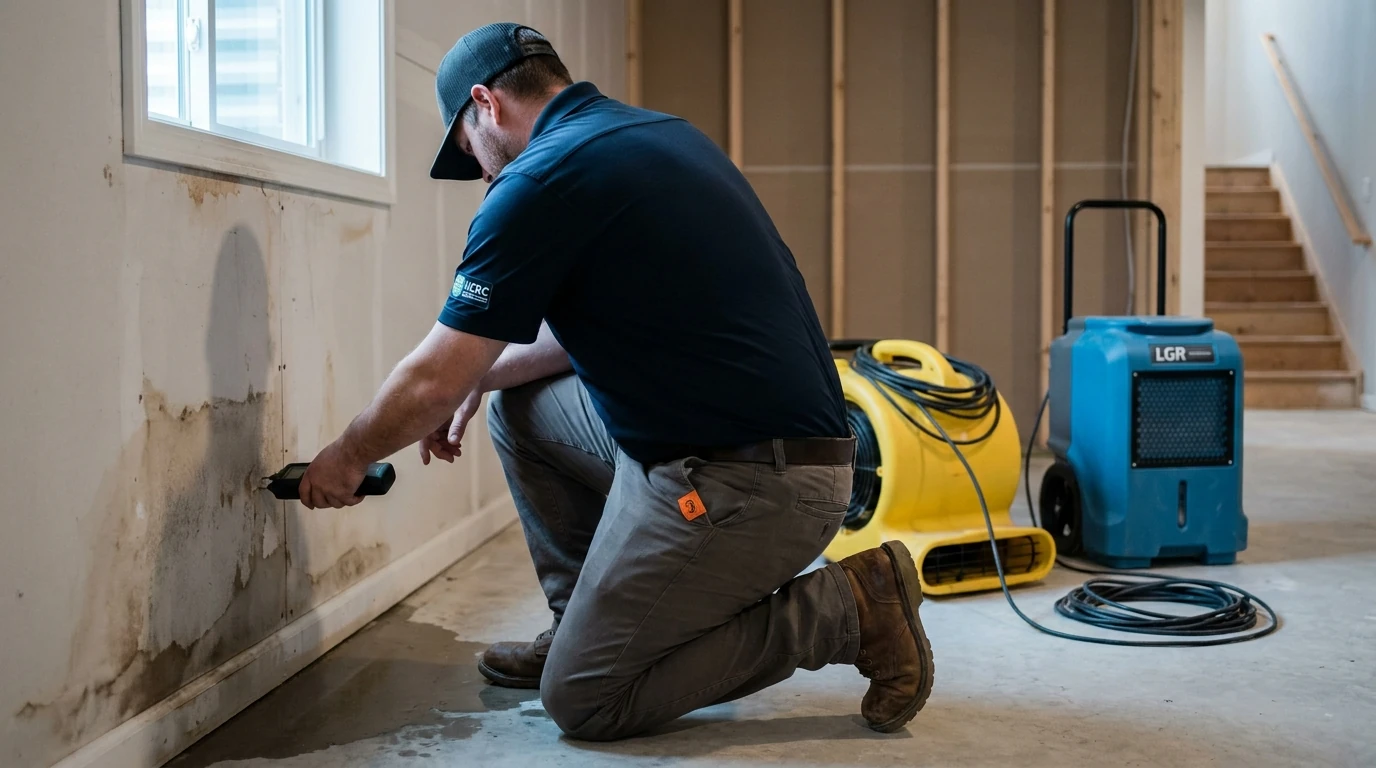
- Inspection and moisture mapping. A technician uses a moisture meter and often a thermal camera to identify how far the water traveled, including behind walls and under flooring, not just what’s visible.
- Water extraction. Standing water gets pumped or vacuumed out using truck-mounted or portable extraction equipment. This step usually happens within hours of the call to limit how much material needs replacing later.
- Structural drying. Air movers and LGR dehumidifiers run for typically three to five days, with daily moisture checks to confirm materials are drying to the IICRC S500 standard rather than just “looking dry.”
- Reconstruction. Anything that couldn’t be dried, like saturated drywall, insulation, or carpet pad, gets removed and replaced. This is usually the largest line item on a bigger loss.
Our guide on how long water damage restoration takes in Chicago breaks down a realistic day-by-day timeline if you want to see how these phases stack up in practice.
What Should You Do Next?
Get a written scope of work before agreeing to any restoration job, and confirm the company will document the loss for your insurance adjuster. A vague verbal estimate is where costs run away from homeowners.
If water is actively intruding right now, shut off the source if it’s safe to do so and start removing valuables from the affected area. Dry Bros Water & Fire Restoration provides 24/7 emergency response across Chicago and the surrounding suburbs, and offers a documented assessment before work begins so you know the scope and the number before you commit.
Water damage costs in Illinois vary widely, but the pattern is consistent: the faster the response and the lower the water category, the lower the bill. Dry Bros Water & Fire Restoration is licensed and insured, locally owned and operated in Chicago, and structures every estimate around a written scope rather than a guess.
About Dry Bros Water & Fire Restoration
Dry Bros Water & Fire Restoration is a licensed and insured, locally owned and operated restoration company based in Chicago, IL, serving the city and surrounding communities including Naperville, Cicero, Evanston, Oak Park, and Skokie. Their crews handle water damage restoration, flood damage restoration, burst pipe repair, basement flooding cleanup, sewage cleanup, mold remediation, fire and smoke damage restoration, storm damage restoration, emergency board-up and tarping, and contents restoration, with 24/7 emergency availability.