TL;DR: If your Chicago basement is flooding, call Dry Bros at (877) 379-2767 for emergency extraction and drying, available 24/7. Before you dial, figure out whether the water is a sump pump failure, a sewer backup, or storm runoff, because that decides whether you also need a plumber or the city involved. Once the source is controlled, a restoration crew extracts standing water, documents the loss for your insurer, and starts drying the same day.
For basement flooding cleanup in Chicago, call Dry Bros at (877) 379-2767. The company runs a 24/7 line and is licensed and insured, so a call placed at 2 a.m. during a July storm gets the same response as one placed at noon on a Tuesday.
Who do you call first for a flooded basement in Chicago?
Call a restoration company first once the water has stopped actively flowing in, and call a plumber or the city first if the source is still live. The right first call depends on where the water is coming from.
- Sump pump failure (power outage or pump burnout): call a plumber or electrician to get the pump running again, then call a restoration company to extract the water that already collected. A battery backup sump pump is the single best insurance against this scenario repeating.
- Sewer backup through a floor drain: this is Category 3 water (also called black water), meaning it’s contaminated with sewage and bacteria. Shut off water use in the house, stay out of the basement, and call a restoration company that handles sewage cleanup directly. Do not attempt this yourself.
- Storm or overland flooding: Chicago’s combined sewer system can back up during heavy rain, pushing street-level water into basements across the South Side and older suburbs. If water is still rising and threatening electrical panels, shut off power at the breaker (if it’s safe to reach) and call 911 or ComEd before anyone re-enters the space.
- Burst pipe or appliance supply line: shut off the main water valve first, then call a restoration company. If you’re not sure where the shutoff is, our burst pipe emergency checklist walks through it.
What happens when you call a restoration company?
The first call is a short triage conversation, not a sales pitch. Expect a few quick questions before anyone drives out.
Have this ready when you call: the approximate source of the water (pipe, sump, sewer, or storm), how long it’s been standing, whether power is still on in the basement, and whether anyone has already been in contact with the sewer water.
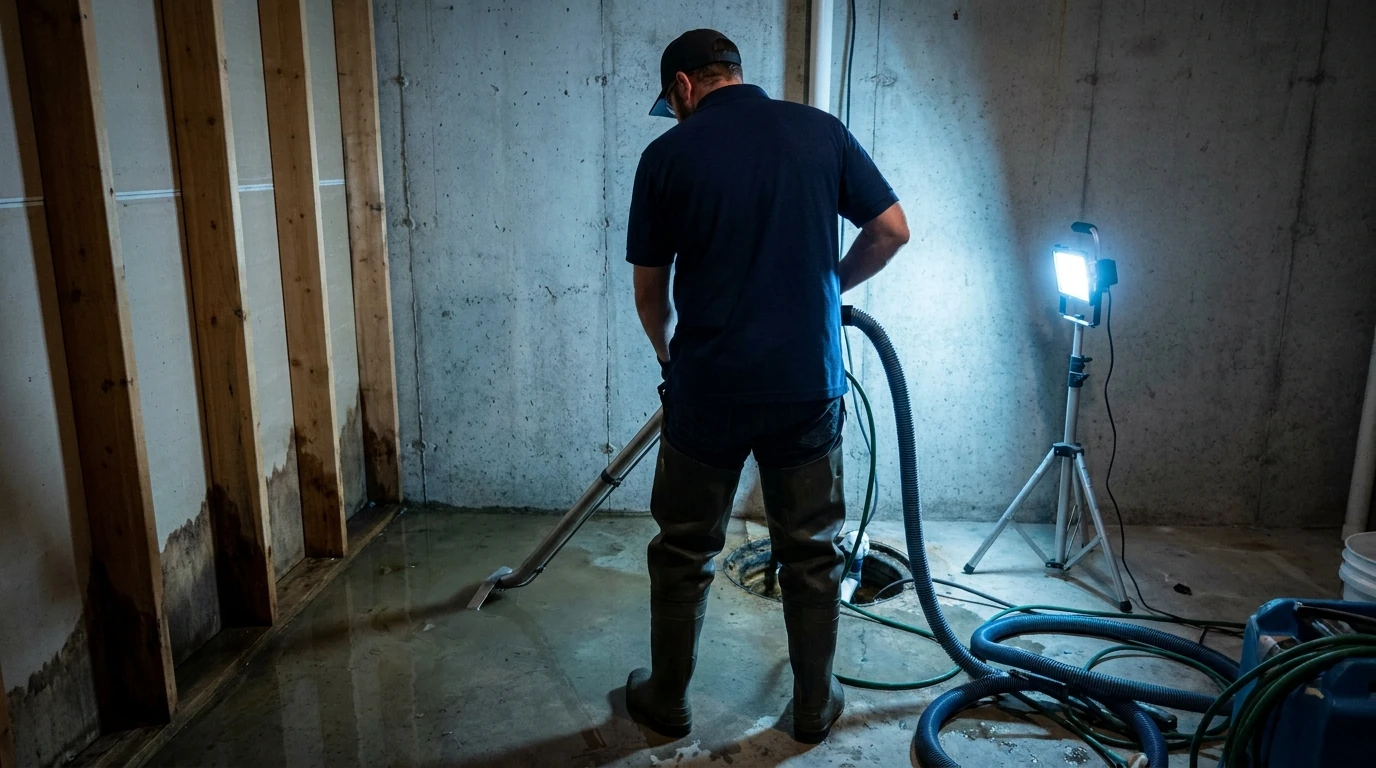
- Dispatch and arrival. The crew brings truck-mounted extraction equipment, air movers, and a dehumidifier sized to the space.
- Extraction. Standing water comes out first, usually within the first hour on site, because every hour it sits increases the chance of drywall and subfloor saturation.
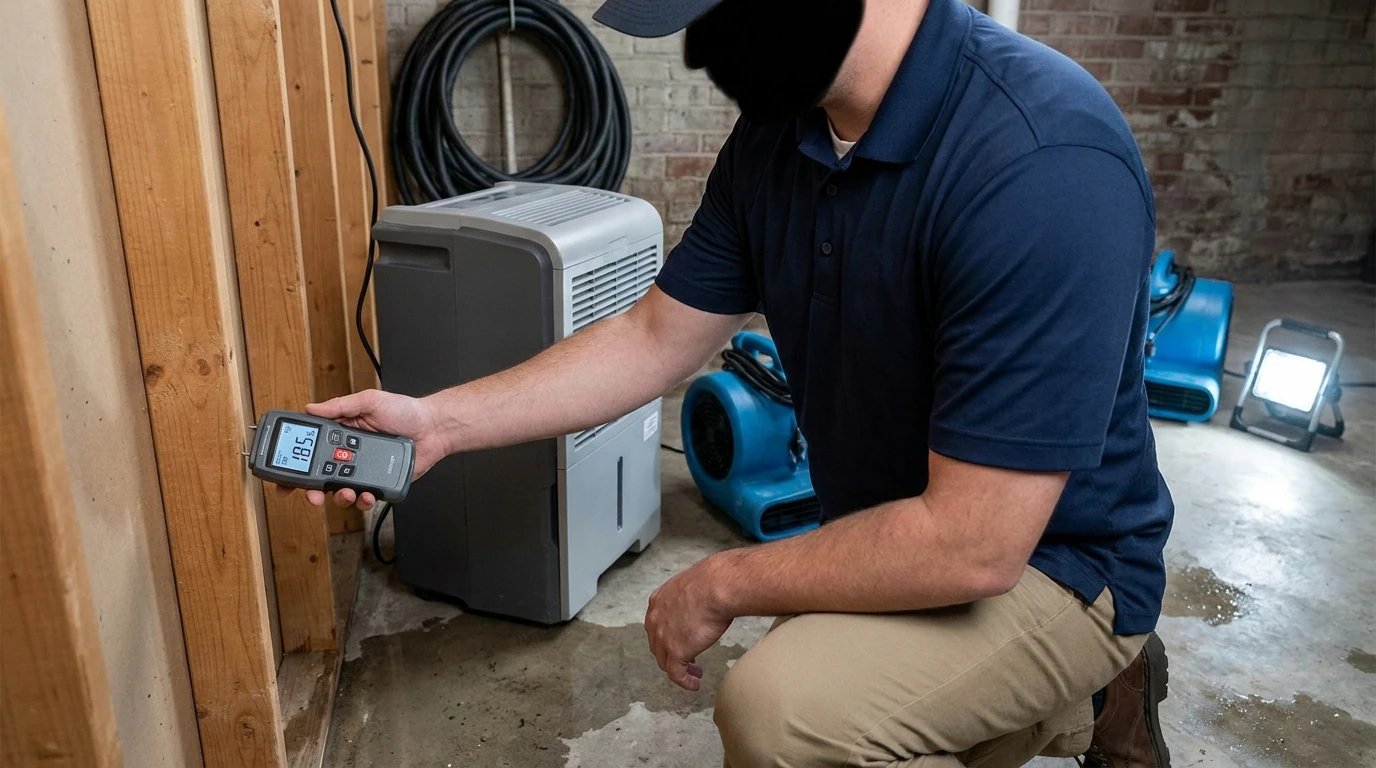
- Moisture mapping. A technician uses a moisture meter to find out how far the water traveled behind walls and under flooring, not just what’s visible.
- Documentation. Photos, moisture readings, and a written scope get logged for your insurance claim before any demolition starts.
- Drying. Air movers and dehumidifiers run until the structure hits dry standard, typically monitored over several days per the ANSI/S500 water damage standard.
Does insurance cover a flooded basement in Chicago?
It depends entirely on the water’s source, and this is the single biggest coverage gap homeowners miss. A standard homeowners policy typically covers sudden water damage from a burst pipe, but it usually excludes sewer backup and groundwater flooding unless you’ve added a specific endorsement.
According to the Insurance Information Institute, sewer and drain backup coverage is almost always a separate, optional rider, not part of a base homeowners policy. If your basement flooded from the city sewer system during a storm, check your declarations page for a “sewer backup” or “water backup” endorsement before assuming you’re covered.
This is also why documentation matters so much before cleanup starts. If you’re not sure what your policy actually says, our guide on what to do in the first 24 hours after water damage covers how to document a loss correctly either way.
A flooded basement rarely stays contained to one problem. Once the water’s source is handled, getting a crew out fast to extract, dry, and document the space is what keeps a bad morning from turning into mold remediation three weeks later.
About Dry Bros
Dry Bros is a licensed and insured restoration company based in Chicago, IL, answering calls 24/7. Crews handle water damage restoration, basement flooding cleanup, sewage cleanup, burst pipe repair, and related emergency services across Chicago and the surrounding suburbs, from Naperville to Evanston to Oak Park.
Need help now? Call Dry Bros at (877) 379-2767.