Flood Damage Restoration in Cicero
Flood damage restoration in Cicero, IL. Insurance billing accepted. Call us now.
Our technicians are dispatched from our Chicago, IL headquarters and are typically on-site in Cicero within 60 minutes of your call.
Cicero sits on some of the flattest, most drainage-challenged terrain in Cook County, and when a heavy rain event overwhelms the combined sewer system that serves much of the town, basements fill fast. The brick two-flats and bungalows that line block after block of this community were built in an era before sump pits were code, and their below-grade spaces were never designed to shed water quickly. When flood water reaches your floor joists, the clock starts immediately, not just on structural damage, but on mold colonization in the wood framing behind those plaster walls.
Why Cicero Properties See Flood Damage Differently
Cicero’s housing stock is overwhelmingly pre-1960, and that matters the moment water enters the picture. Older clay tile sewer laterals are common throughout the town, and when street-level flooding backs pressure into the system, those laterals can reverse-flow directly into floor drains. Unlike a supply-line burst that stops when you shut the valve, a sewer backup event keeps pushing until the street recedes. That means the water entering a Cicero basement often carries sewage contamination, what the industry classifies as Category 3 water, which changes the entire scope of cleanup. Porous materials like carpet, drywall, and insulation that contact Category 3 water typically cannot be dried and saved; they need to come out.
The soil composition across this part of Cook County also slows drainage at the foundation level. Heavy clay content means water that saturates the ground around a foundation stays there, continuing to seep through block or poured walls long after the surface flooding has receded. A crew that pulls equipment after one day of drying without monitoring the perimeter moisture is leaving a job unfinished.
Our Flood Damage Restoration Process in Cicero
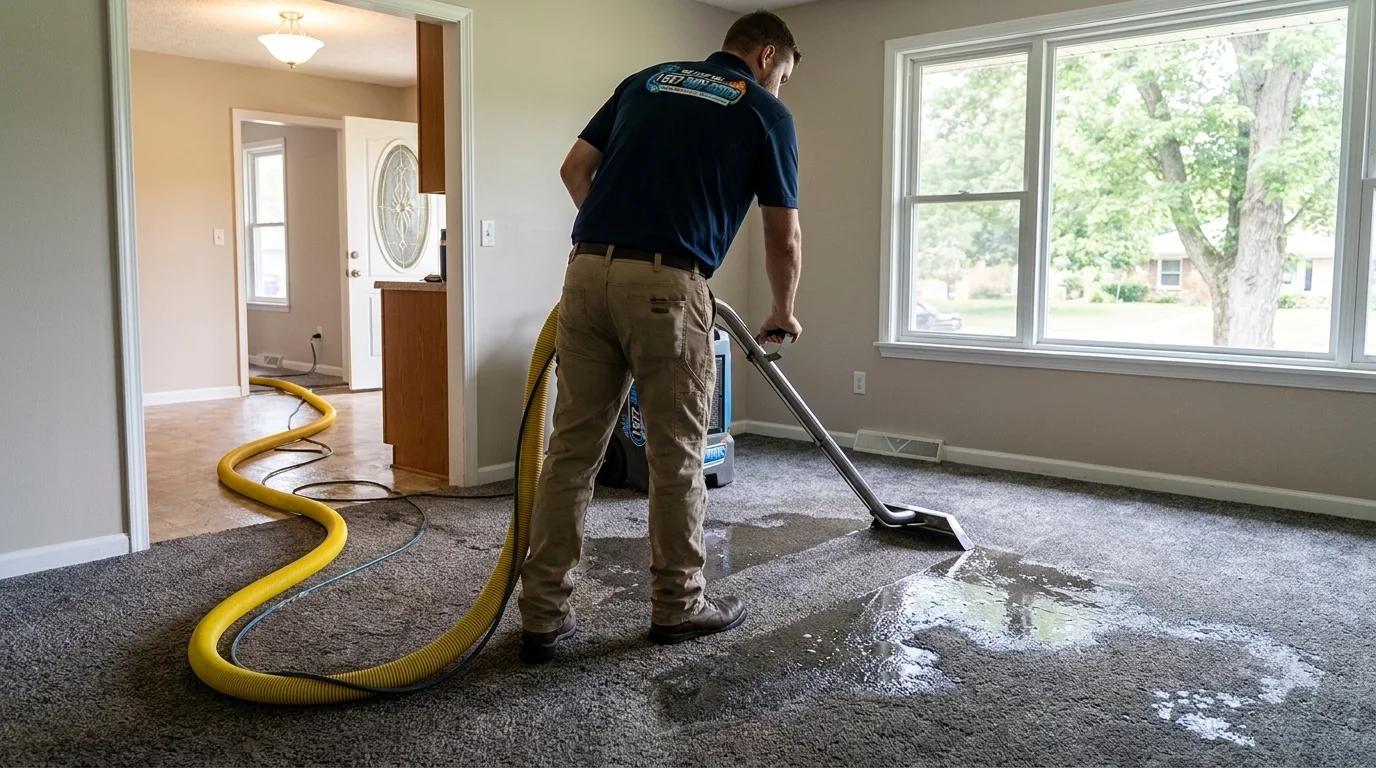
The first step on any flood job here is water classification. We inspect the source, whether it’s a backed-up floor drain, an overtopped window well, or a failed sump, before touching a pump, because the contamination category determines what gets extracted versus what gets removed entirely.
Once the source is identified and safe to work around, we extract standing water and begin systematic moisture mapping. In Cicero’s older construction, that means probing behind plaster, checking the cavities between brick wythe and interior framing, and reading subfloor moisture through finished surfaces. Plaster walls read dry at the surface while the wood lath behind them stays saturated, a reading from a pin meter on the plaster face alone will miss it every time.
After extraction, we establish a drying system calibrated to the actual moisture load in the structure, not a standard setup dropped in and left. Dehumidifiers, air movers, and where necessary, desiccant equipment for tight cavities, run until daily readings confirm the structure has returned to normal moisture levels for this climate. We document every reading so there’s a clear record for your insurance adjuster.
Reaching Cicero from Chicago
Dry Bros operates out of Chicago, and Cicero is a direct run west on the Eisenhower or via Cermak Road depending on where in town the job is. We do not publish a response-time guarantee in minutes, traffic on the Eisenhower corridor is genuinely variable, but we schedule promptly and communicate arrival windows clearly. If you’re calling during business hours, expect a real person to answer now, not a voicemail queue.
Cicero Insurance Coordination
Flood damage claims in Cicero often involve two separate coverage questions: standard homeowner’s insurance (which typically covers sudden and accidental water damage from internal sources) and flood insurance through the National Flood Insurance Program (which covers rising water from outside the structure). Many Cicero homeowners discover at claim time that their standard policy excludes sewer backup unless they purchased a specific rider. We document the loss thoroughly, photographs, moisture logs, material inventories, and provide that documentation in a format adjusters can use directly. We bill carriers and work through the process with you, but we’re not a public adjuster and we don’t make coverage decisions; that’s between you and your insurer.
Local Note
In Cicero’s older two-flats and courtyard buildings, the basement utility space is often shared between units, which means a flood event on one side of the building affects the structural floor system for both. When we scope a job in one of these buildings, we always check moisture readings on the adjoining side, even if the other tenant reports no visible water. Water migrates through shared framing silently, and a drying job that addresses only the reported unit can leave the adjacent unit with a mold problem three weeks later. Landlords and property managers in Cicero should factor this into how they report the loss to their carrier from the start.
If you’re dealing with standing water or a soaked basement right now, call Dry Bros at call us now. We’ll walk through what you’re seeing, tell you what needs to happen first, and get a crew scheduled for your Cicero property.
Flood Damage Restoration in Cicero: Service Coverage
Frequently Asked Questions
How fast can you arrive for flood damage restoration in Cicero?
Does Cicero's combined sewer system affect what kind of flood cleanup my basement needs?
Cicero has a lot of older two-flats and multi-unit buildings, how does flood restoration work when the basement is shared between tenants?
How does Cicero's clay-heavy soil affect how long flood drying takes?
What's the difference between homeowner's insurance and flood insurance for a Cicero property, and does it affect how you bill?
How do you dry plaster walls in Cicero's older homes without tearing everything out?
Flood Damage Restoration response in Cicero
Most Cicero calls see a technician on-site within 60 minutes from our Chicago headquarters.