Basement Flooding Cleanup in Evanston
Basement flooding cleanup in Evanston, IL. Insurance billing accepted. Call us now.
Our technicians are dispatched from our Chicago, IL headquarters and are typically on-site in Evanston within 60 minutes of your call.
Evanston sits on a narrow strip of land between Lake Michigan and the Chicago city line, and that geography shapes what happens under your home when it rains hard. The combination of aging combined sewer infrastructure, clay-heavy soil that sheds water rather than absorbing it, and a housing stock that leans heavily on full-depth basements means a heavy storm or a burst supply line can turn a finished lower level into a standing-water emergency faster than most homeowners expect. Dry Bros Water & Fire Restoration responds to flooded basement calls throughout Evanston and coordinates closely with property owners on next steps from the first call.
Why Evanston Properties See Basement Flooding
The soil profile under most of Evanston is glacial lake clay, dense, low-permeability material that doesn’t drain well. When rainfall saturates the ground faster than it can move laterally, hydrostatic pressure builds against foundation walls and floor slabs. Older homes with block or rubble-stone foundations are particularly vulnerable because the mortar joints have had decades to soften and crack, creating pathways for water that weren’t there when the house was built.
Evanston’s combined sewer system, which carries both stormwater and sanitary flow in the same pipe, can also back up during intense rain events. When the main is overwhelmed, water can reverse through floor drains and laundry connections in the basement. That type of intrusion carries contamination concerns that go beyond simple water removal and require a different cleanup protocol than a clean-water pipe burst.
The city’s housing stock is another factor. A large share of Evanston’s residential buildings date from the late 1800s through the 1940s, which means full masonry basements, older drain tile systems that may have collapsed or silted over, and in some cases original clay sewer laterals that are past their service life. These conditions don’t cause flooding on their own, but they raise the risk profile significantly when a storm or plumbing failure occurs.
Our Basement Flooding Cleanup Process in Evanston
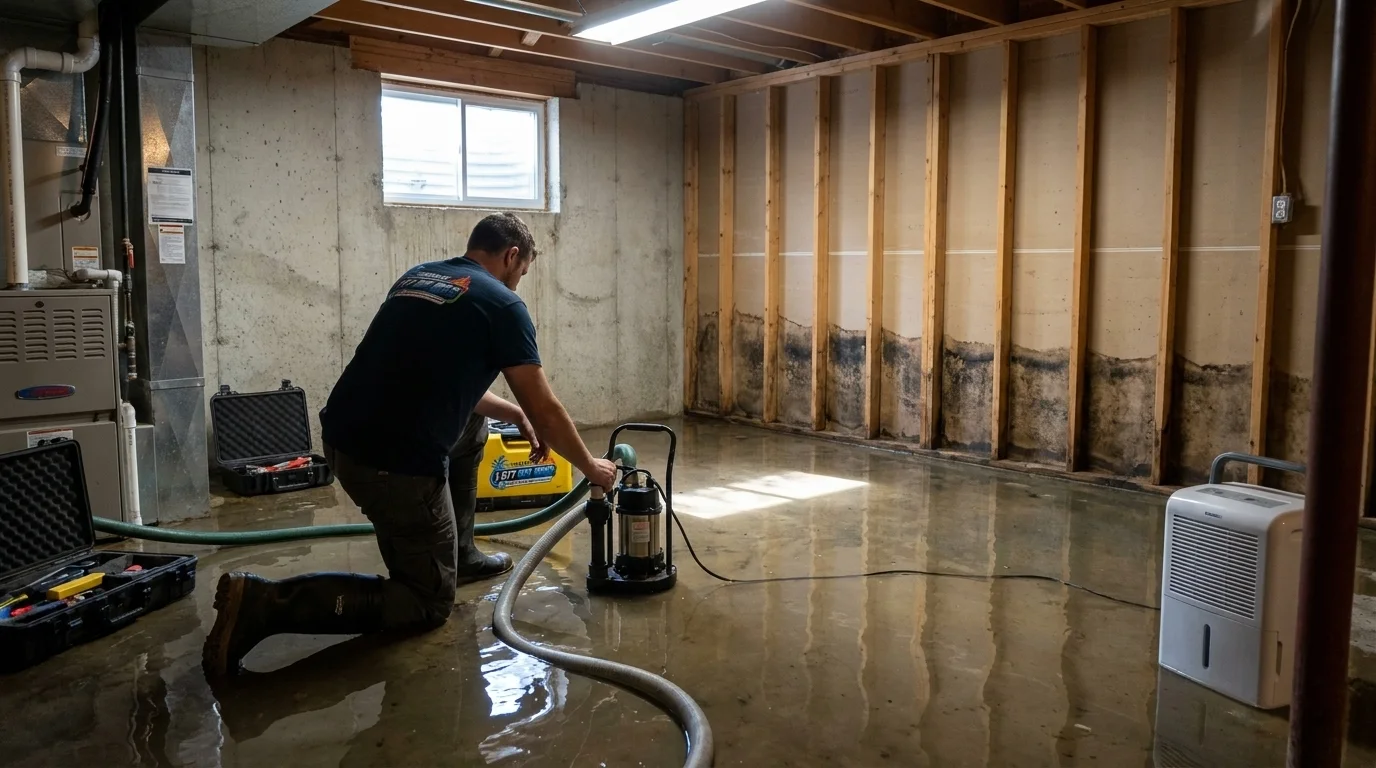
The first step on any flooded basement call is assessing the water source and contamination category before equipment goes in. A clean-water supply-line break is handled differently from a sewer backup or groundwater intrusion, and the category determines what personal protective equipment the crew uses, how materials are handled, and what documentation goes to your insurance carrier.
Once the source is identified and stopped or contained, standing water is extracted using truck-mounted or portable extraction units. In finished basements, that often means pulling carpet and pad immediately, saturated carpet acts as a reservoir that slows structural drying significantly. Drywall that has wicked moisture above the flood line is typically cut and removed rather than dried in place, because leaving wet drywall behind creates conditions where mold can colonize within days.
After extraction, high-capacity air movers and dehumidifiers are positioned to dry the structural assembly, concrete slab, framing, subfloor, and any remaining wall cavities. Moisture readings are taken at each visit and logged so there’s a documented drying record, which matters when the claim goes to your adjuster.
Reaching Evanston from Chicago
Dry Bros operates out of Chicago, and Evanston is a direct run up Sheridan Road or the Edens Spur depending on where in the city the call originates and what traffic looks like. For properties in the southern part of Evanston near the Wilmette border, the route is straightforward. Calls are scheduled promptly, contact us now to get on the calendar and discuss your situation before conditions worsen.
Local Note: Clay Soil and Hidden Saturation
One thing that catches Evanston homeowners off guard is how long the ground stays saturated after a significant rain event. Because the clay soil drains so slowly, hydrostatic pressure against the foundation can persist for days after the storm passes, meaning a basement that appears to have stopped taking on water may still be at risk of additional seepage while the surrounding soil is still holding moisture. If your sump pump is running constantly two days after a storm, that’s not a malfunction; it’s the clay releasing water gradually. We account for this when setting up drying equipment, because pulling equipment too early in this soil environment often leads to secondary moisture problems.
If your basement has taken on water, whether from a backed-up drain, a failed sump, a cracked wall, or a burst pipe, call Dry Bros Water & Fire Restoration at call us now. We’ll walk through what happened, explain the cleanup process specific to your home’s construction, and get the work scheduled before standing water has a chance to cause deeper structural damage or create conditions for mold growth.
Basement Flooding Cleanup in Evanston: Service Coverage
Frequently Asked Questions
How fast can you arrive for basement flooding cleanup in Evanston?
Does Evanston's combined sewer system change how a flooded basement is cleaned up?
How does Evanston's older housing stock affect the basement drying timeline?
Can hydrostatic pressure cause ongoing seepage in Evanston even after a storm ends?
What should I do immediately after my Evanston basement floods before your crew arrives?
Does Dry Bros handle insurance documentation for basement flooding claims in Evanston?
Basement Flooding Cleanup response in Evanston
Most Evanston calls see a technician on-site within 60 minutes from our Chicago headquarters.