Contents Restoration and Storage in Evanston
Contents restoration and storage in Evanston, IL. Insurance billing accepted. Call us now.
Our technicians are dispatched from our Chicago, IL headquarters and are typically on-site in Evanston within 60 minutes of your call.
Evanston’s housing stock tells a particular story in water and fire losses: a city where Victorian-era greystones sit a block from mid-century brick two-flats, and where Lake Michigan’s humidity can push into a home before the smoke smell even clears. When a burst pipe or kitchen fire forces you out of a home on the North Shore, the belongings inside, furniture, artwork, clothing, documents, family heirlooms, face a second wave of damage from soot migration, moisture absorption, and odor penetration that gets worse with every hour they stay in a compromised space. Contents restoration and storage is the process that pulls those items out of harm’s way, cleans and deodorizes them using methods matched to each material, and keeps them in a climate-controlled facility until your home is ready to receive them again.
Why Evanston Properties See Contents Damage Differently
The age of a building shapes what happens to the things inside it. Much of Evanston’s residential core, the neighborhoods stretching west from the lakefront, was built before World War II, and those homes share a few characteristics that matter for contents recovery. Plaster walls and horsehair insulation hold moisture longer than modern drywall, meaning water from a pipe failure or firefighting efforts lingers in the structure and keeps the indoor humidity elevated long after the visible water is gone. Fabrics, wood furniture, and paper goods sitting in that environment continue absorbing moisture even after the initial event is over.
Lakefront proximity adds another layer. The relative humidity swings along the Lake Michigan shoreline are more pronounced than they are even a few miles inland, and those swings accelerate the warping of wood furniture, the delamination of veneers, and the spread of mold spores onto soft goods left in place. Getting contents out of the structure quickly, a pack-out, is not just a convenience; in Evanston’s climate, it is often the difference between a piece of furniture that can be restored and one that cannot.
Older homes also tend to have more items worth saving. Decades of accumulated furniture, original built-ins that were removed for safety, and collections of books or art are common in the city’s pre-war housing stock. That means a contents inventory in Evanston often requires more careful documentation and more varied cleaning methods than a newer construction loss.
Our Contents Restoration and Storage Process in Evanston
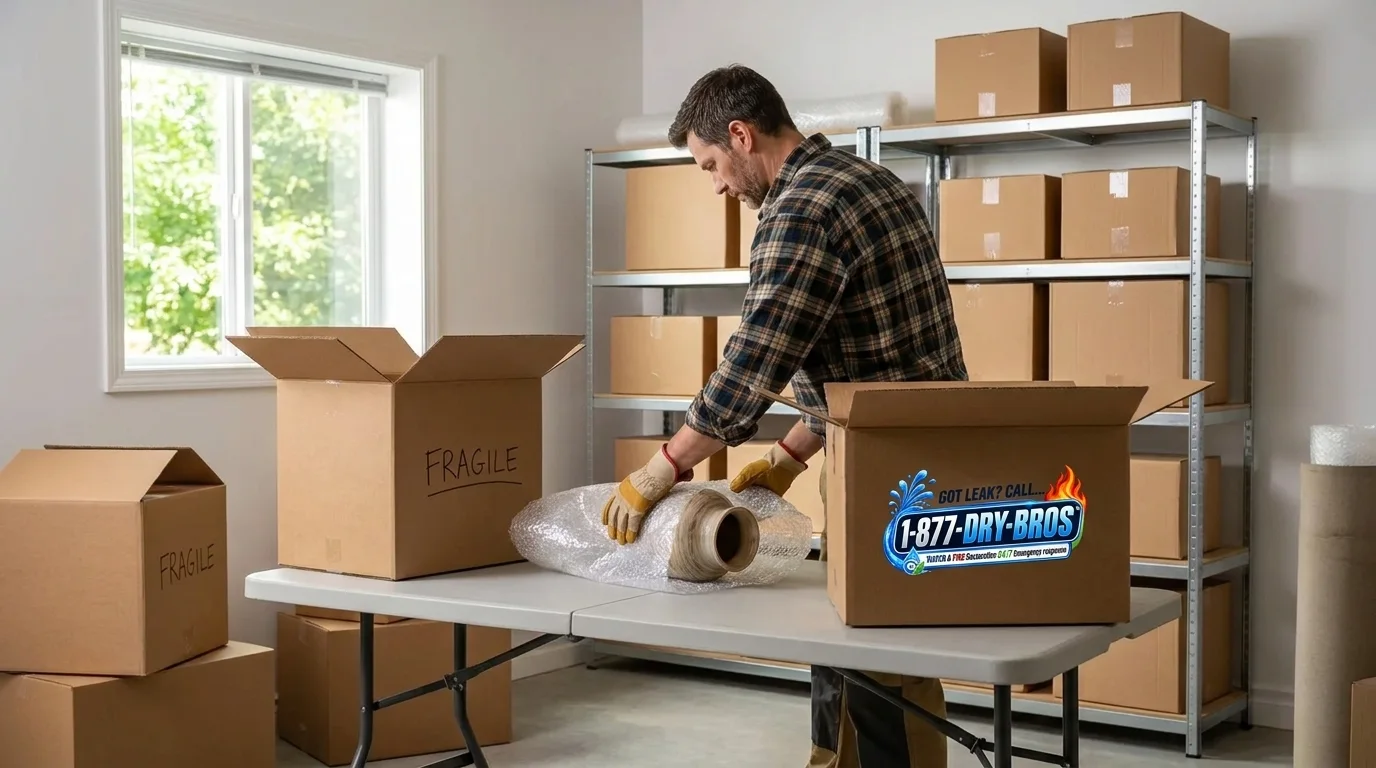
Every pack-out begins with a room-by-room inventory. Each item is photographed, catalogued, and assessed for the type of damage present, smoke residue, water saturation, soot embedding, or odor. That documentation serves two purposes: it gives your insurance adjuster a complete record of what was affected, and it tells our technicians which cleaning method each item needs.
From there, items move to a climate-controlled storage facility where temperature and humidity are held stable, critical for wood furniture and artwork that have already been stressed by a loss event. Cleaning methods vary by material: ultrasonic cleaning for hard goods and small items, dry-cleaning and ozone treatment for textiles and clothing, document drying and freeze-stabilization for paper goods, and hand-cleaning with appropriate solvents for finished wood surfaces and upholstery.
When your home is cleared for re-occupancy, contents are returned in the same documented order they left, with a final walkthrough to confirm everything is accounted for.
Coordinating with Insurance on Evanston Losses
Contents claims in Evanston typically run through homeowner’s or renter’s policies, and the documentation standards carriers require have gotten more detailed in recent years. A complete pack-out inventory, with photographs, item descriptions, and condition notes, gives your adjuster what they need to process a contents claim without extended back-and-forth. We provide that documentation as a standard part of the pack-out process, not as an add-on.
For renters in Evanston’s large stock of multi-unit buildings and courtyard apartments, the process is the same: your personal property is covered under your renter’s policy regardless of what caused the building-level damage. We work with both property owners and tenants when a loss affects multiple units.
Local Note
Evanston’s alley-loaded lots, common throughout the city’s older residential blocks, can complicate pack-out logistics in ways that aren’t obvious from an address alone. Many of the greystones and brick two-flats near the lakefront have their primary storage and basement access from the rear alley rather than the front door, and those alleys are often narrow enough that a standard moving truck cannot stage there. When we schedule a pack-out in Evanston, we confirm alley width and access points in advance so the crew arrives with the right vehicle configuration and doesn’t lose time on-site working around a staging problem.
If you’re dealing with a loss right now, call Dry Bros Water & Fire Restoration now. We’ll assess what needs to come out, document everything before it moves, and keep your belongings safe while your Evanston home is being restored.
Contents Restoration and Storage in Evanston: Service Coverage
Frequently Asked Questions
How fast can you arrive for contents restoration and storage in Evanston?
How does Evanston's lakefront humidity affect how quickly contents need to be removed after a water or fire loss?
Evanston has a lot of older homes with antique furniture and original built-ins, can those be restored, or are they typically a total loss?
I rent an apartment in one of Evanston's courtyard buildings and my unit was damaged by a fire in another unit, does contents restoration apply to my belongings?
What cleaning methods do you use for clothing and textiles damaged in a fire or water loss?
How does the pack-out documentation help with my insurance claim in Illinois?
Contents Restoration and Storage response in Evanston
Most Evanston calls see a technician on-site within 60 minutes from our Chicago headquarters.