Contents Restoration and Storage in Chicago
Contents restoration and storage in Chicago and surrounding areas. Insurance billing accepted. Call us now.
After a fire or flood, the structure gets the headlines, but your furniture, clothing, artwork, documents, and keepsakes are often what homeowners grieve most. The problem is that contents are frequently left sitting in smoke-saturated or water-damaged rooms for days while structural work is scoped, letting soot oils penetrate fabric fibers deeper and mold begin colonizing upholstered surfaces. Contents restoration and storage is the discipline of getting those belongings out, cleaned, and held safely before that window closes.
What contents restoration and storage actually involves
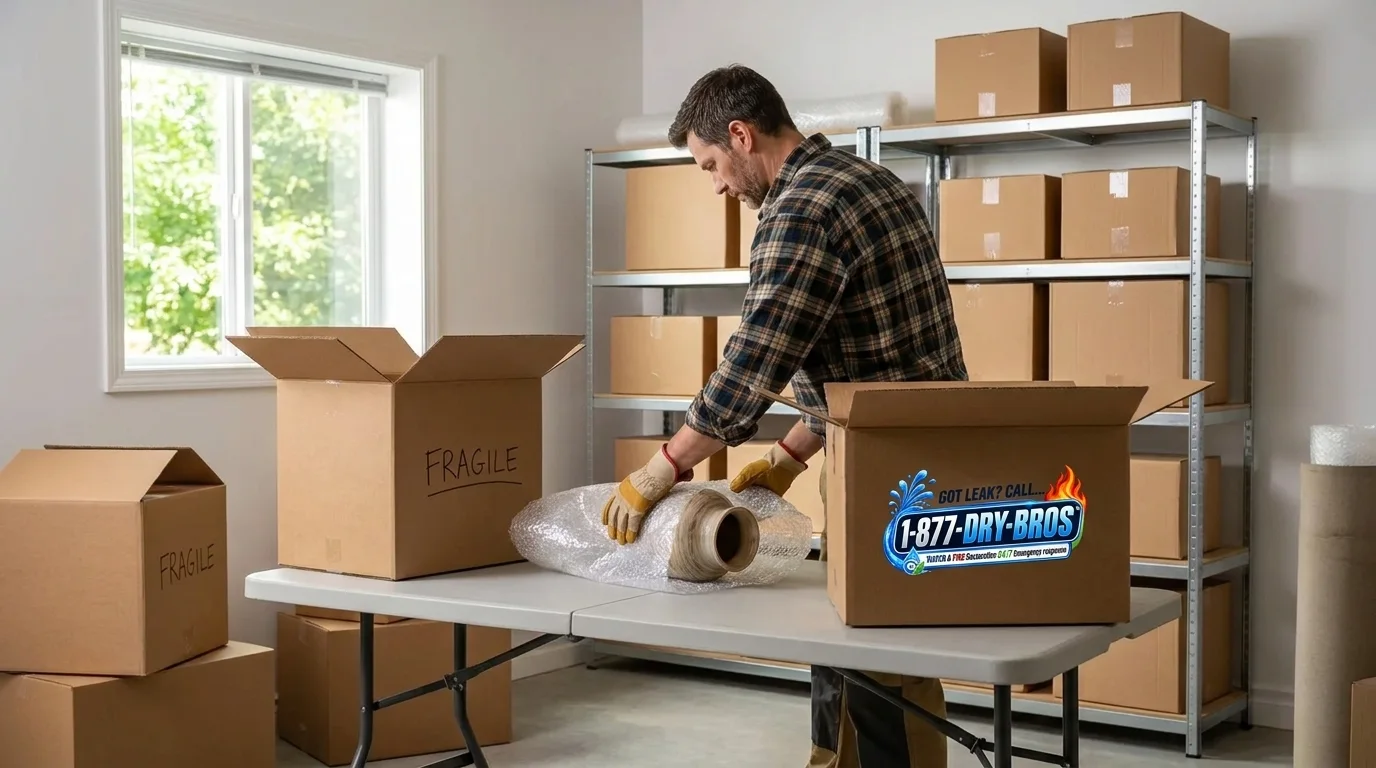
Pack-out is the first move, a documented inventory of every item removed from the loss area, photographed and catalogued before it leaves the property. From there, belongings are transported to a climate-controlled facility where technicians sort items by material type and damage category: textiles go one direction, hard goods another, electronics and documents to specialists.
Cleaning methods vary sharply by material and contaminant. Smoke-damaged hard surfaces may need ultrasonic cleaning, high-frequency sound waves in a cleaning solution that pull soot out of crevices no brush can reach. Textiles typically go through ozone or hydroxyl treatment to neutralize odor molecules rather than mask them. Water-damaged documents may be freeze-dried to halt further deterioration. Furniture with smoke or water damage to upholstery is evaluated for whether the substrate, the foam, the batting, the frame, can be restored or needs replacement.
Once cleaned and dried, items are stored in a secured, climate-controlled warehouse until the structure is ready to receive them. A detailed chain-of-custody log tracks every item from pack-out through return delivery, which matters both for your peace of mind and for the insurance adjuster reviewing the claim.
Our process
-
On-site inventory and pack-out, Before a single box leaves your home, every item is photographed, logged, and assigned a tracking number. Fragile and high-value items are noted separately. This documentation is the foundation of your contents claim.
-
Triage and damage assessment, At the cleaning facility, technicians separate items by damage type and material. A leather sofa with smoke odor needs a different approach than a waterlogged wood dresser or a box of soot-covered family photos. Mismatching method to material is one of the most common ways contents get damaged further during restoration.
-
Cleaning and deodorization, Hard goods go through ultrasonic tanks or hand-cleaning with appropriate solvents. Soft goods are treated for odor using hydroxyl generators or ozone chambers, depending on material sensitivity. Electronics are assessed by a qualified technician before any cleaning is attempted, energizing a water-damaged circuit board without inspection can cause permanent failure.
-
Drying, curing, and quality check, Cleaned items are dried in controlled conditions and inspected before storage. Anything that cannot be restored to a functional, safe, and odor-free condition is documented for replacement value, a critical step for insurance purposes.
-
Secure storage and return delivery, Items are stored in a climate-controlled, secured facility until your home is ready. Return delivery is coordinated with your project timeline, and a final inventory reconciliation confirms every item is accounted for.
What separates a good contents response from a bad one
The most common failure in contents restoration is delay. Smoke odor is not a surface problem, the acidic oils in soot begin bonding to fabric and finish within hours of a fire. Clothing left in a smoke-damaged room for a week may be unsalvageable where the same garments packed out the same day could have been cleaned. The same urgency applies after water damage: upholstered furniture sitting in a humid loss environment is on a short clock before mold colonizes the interior foam, which is rarely visible until the damage is extensive.
A second common failure is poor documentation. An adjuster reviewing a contents claim needs a line-item inventory with pre-loss condition notes and post-loss photographs. Vague descriptions like “miscellaneous household items” create disputes and delays. Thorough pack-out documentation protects the homeowner and speeds the claim.
Less experienced operators also sometimes apply the wrong cleaning method to the wrong material, using aggressive solvents on finished wood, or running delicate textiles through processes designed for synthetics. Ultrasonic cleaning, for example, is highly effective on metal and glass but can damage certain finishes and electronics if settings are not calibrated correctly.
Insurance adjusters look for a clear chain of custody, itemized before-and-after documentation, and a written scope that distinguishes restorable items from total losses. That distinction, restore versus replace, directly affects the claim settlement.
What does contents restoration and storage cost?
Typical costs for contents pack-out, cleaning, and storage depend on the volume of items, the type of damage, and the cleaning methods required. Most homeowners pay somewhere in the ranges below, though every loss is different, Dry Bros Water & Fire Restoration provides a written scope before any work begins so there are no surprises.
| Scenario | Typical industry range |
|---|---|
| Single room, smoke-damaged hard goods only | $800 – $2,500 |
| Full-floor pack-out, mixed contents, water damage | $2,500 – $6,000 |
| Whole-house pack-out after structure fire | $6,000 – $18,000+ |
| Ultrasonic cleaning, electronics triage (add-on) | $500 – $3,000 |
| Extended climate-controlled storage (per month) | $150 – $500 |
| Document and photo restoration (per batch) | $300 – $1,500 |
Homeowners insurance typically covers contents restoration and storage when the loss is caused by a covered peril, fire, smoke, and sudden water damage are the most common. Coverage limits and depreciation schedules vary by policy, so reviewing your declarations page early in the process is worth doing.
Seasonal and regional considerations
Chicago’s climate creates a few patterns worth knowing. Bitter winters drive residents to run furnaces hard, and heating equipment failures are a leading cause of residential fires from November through February, meaning contents pack-outs after fire damage cluster in those months. Summer humidity in the region can complicate storage: items packed out after a water loss and stored in a non-climate-controlled environment can develop mold during a humid July even if they arrived clean. Climate-controlled storage is not optional in this region, it is a baseline requirement.
Older housing stock throughout Chicago and the surrounding suburbs, much of it built before 1960, often contains plaster-and-lath walls, horsehair insulation, and vintage hardwood floors. These materials absorb smoke and odor differently than modern drywall construction, and contents in these homes are often more heavily saturated after a fire because the structure itself holds more residue.
Service area
Dry Bros Water & Fire Restoration serves Chicago and the surrounding region, including communities throughout Cook, DuPage, Lake, and Will counties. City-and-service combination pages cover specific neighborhoods and suburbs, all of them link back here for the full picture of what contents restoration and storage involves.
If your belongings are sitting in a damaged room right now, the clock on salvageability is already running. Call Dry Bros at call us now to schedule a contents pack-out assessment, the sooner items are out of the loss environment, the more of them can be saved.
Frequently Asked Questions
Does homeowners insurance cover contents restoration and storage?
What is a contents pack-out, and do I have to do it?
How do technicians decide whether to restore or replace a damaged item?
How does ultrasonic cleaning work, and what kinds of items is it used for?
How long does contents storage typically last, and what conditions should I expect?
Looking for the best contents restoration and storage company in Chicago?
Dry Bros Water & Fire Restoration provides contents restoration and storage in Chicago, IL and the surrounding area. We answer calls 24/7 — call (877) 379-2767 for immediate help.
Need Contents Restoration and Storage now?
We respond 24/7 across Chicago and surrounding IL cities.
Related Coverage
- Our Restoration Services
- Contact Dry Bros Water & Fire Restoration
- Contents Restoration and Storage in Berwyn
- Contents Restoration and Storage in Cicero
- Contents Restoration and Storage in Des Plaines
- Contents Restoration and Storage in Evanston
- Contents Restoration and Storage in Naperville
- Contents Restoration and Storage in Oak Park
- Contents Restoration and Storage in Skokie