Flood Damage Restoration in Naperville
Flood damage restoration in Naperville, IL. Insurance billing accepted. Call us now.
Our technicians are dispatched from our Chicago, IL headquarters and are typically on-site in Naperville within 60 minutes of your call.
Naperville sits at the confluence of the DuPage River and its tributaries, and when heavy rain pushes those waterways over their banks, the flooding that follows moves fast and hits hard. The city’s mix of older ranch-style homes in established subdivisions and newer construction near the river corridor means flood damage here rarely looks the same twice, and the window to prevent secondary damage like mold colonization closes within 24 to 48 hours of initial saturation. If your home has taken on water, the decisions you make in the first few hours matter more than almost anything else.
Why Naperville Properties See Flood Damage Issues
Naperville’s position in DuPage County places it squarely in a region where clay-heavy glacial soils slow drainage dramatically. Unlike sandy soils that allow water to percolate downward, the dense clay beneath much of Naperville holds moisture near the surface, which means a heavy storm event doesn’t just cause surface flooding. It drives hydrostatic pressure against foundation walls and basement floors, forcing water through hairline cracks and floor-wall joints that homeowners may never have noticed before.
The DuPage River and its branches run through and around the city, and properties near the river corridor face a compounding risk: overland flooding from storm runoff combines with rising groundwater during prolonged rain events. Older neighborhoods with mature tree canopies can also see sump pump failures when root intrusion compromises discharge lines, a pattern that shows up more often in homes built before the widespread adoption of modern PVC plumbing.
Naperville’s rapid residential growth over the past three decades also means the city contains a wide range of construction vintages side by side. Homes from the 1970s and 1980s often have block foundation walls that are more porous than poured concrete, and their original waterproofing membranes, if they had one at all, have long since degraded. When those homes flood, water doesn’t just pool on the basement floor; it wicks into the block cells and can stay there long after the visible water is gone.
Our Flood Damage Restoration Process in Naperville
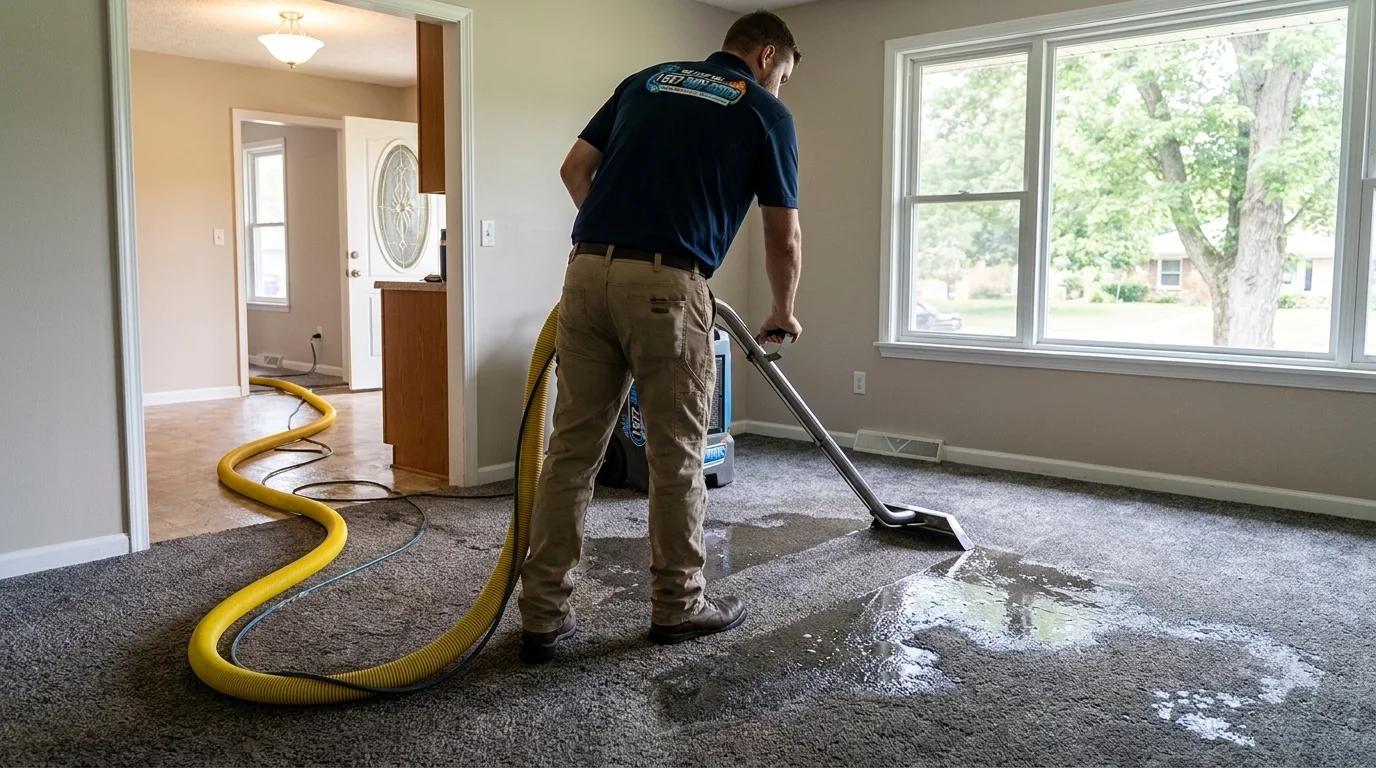
The first priority on any flood job is stopping ongoing water intrusion, whether that means coordinating with a plumber, addressing the sump pump, or sandbagging an entry point. Once the source is controlled, the extraction phase begins. Standing water comes out with truck-mounted extraction units, but the work doesn’t stop there. Moisture meters and thermal imaging cameras reveal what the eye can’t: saturated wall cavities, wet subfloor assemblies, and insulation that has absorbed water like a sponge.
Drying in Naperville homes requires calibrating equipment to the actual conditions inside the structure, not a generic setting. DuPage County’s humid continental climate means outdoor air is rarely dry enough to help, in fact, opening windows during a wet Illinois summer can introduce more moisture than it removes. Industrial desiccant and refrigerant dehumidifiers, combined with high-velocity air movers, create a controlled drying environment that pulls moisture out of building materials systematically. Moisture readings are logged daily so the drying curve can be tracked and documented.
Once structural materials reach target moisture levels, affected areas are cleaned and treated to address any microbial growth that began during the saturation period. Documentation of the entire process, photos, moisture logs, equipment placement records, is compiled throughout, which matters both for insurance claims and for any future disclosure requirements.
Naperville Insurance & HOA Coordination
Flood damage claims in Naperville can involve multiple coverage layers. Standard homeowners policies typically cover sudden and accidental water damage but exclude rising groundwater or overland flooding, those losses generally fall under a separate National Flood Insurance Program policy if the homeowner carries one. Sorting out which policy applies, and to which portion of the damage, is something adjusters work through during the claim process.
What helps that process move efficiently is thorough documentation from the start. Dry Bros photographs affected materials before anything is moved or removed, catalogs damaged contents, and provides moisture logs that show the scope of saturation at the time of arrival. That record becomes the foundation of the claim file.
For homeowners in Naperville’s HOA-governed communities, and there are many, particularly in the newer developments along the city’s western and southern edges, restoration work that affects exterior drainage, shared utility connections, or common-wall assemblies may require HOA notification or approval before certain repairs begin. It’s worth a call to your association manager early in the process to understand what your CC&Rs require.
Local Note
Naperville’s older ranch homes, particularly those built in the 1960s and early 1970s, frequently have original hardwood flooring installed directly over a concrete slab with minimal vapor barrier between them. When those slabs flood, the hardwood can cup and buckle within hours, but the slab itself retains moisture for weeks. Rushing to refinish or replace the flooring before the slab reaches acceptable moisture content almost always leads to the same problem repeating. Monitoring the slab with a concrete moisture probe, not just the surface of the wood, is the step that determines whether a floor can be saved or needs to come out entirely.
If your home has taken on water, call Dry Bros Water & Fire Restoration now. The sooner extraction and drying begin, the better the outcome for your structure, your contents, and your claim.
Flood Damage Restoration in Naperville: Service Coverage
Frequently Asked Questions
How fast can you arrive for flood damage restoration in Naperville?
How quickly can Dry Bros reach Naperville from the Chicago area?
Does Naperville's clay soil affect how flood damage restoration works in my basement?
My Naperville home has a block foundation, does that change the restoration approach?
What's the risk of mold after a flood in a Naperville home, and how fast does it develop?
Will my insurance cover flood damage from the DuPage River overflowing, or only from a burst pipe?
Flood Damage Restoration response in Naperville
Most Naperville calls see a technician on-site within 60 minutes from our Chicago headquarters.