Flood Damage Restoration in Oak Park
Flood damage restoration in Oak Park, IL. Insurance billing accepted. Call us now.
Our technicians are dispatched from our Chicago, IL headquarters and are typically on-site in Oak Park within 60 minutes of your call.
Oak Park sits at the edge of Cook County where the flat prairie grade and aging combined sewer infrastructure create a flood profile unlike most Chicago suburbs. When a heavy storm rolls through, water doesn’t just enter through doors and windows, it backs up through floor drains, seeps beneath century-old limestone foundations, and saturates the balloon-frame construction that defines so much of the village’s residential stock. Dry Bros Water & Fire Restoration responds to flood damage calls throughout Oak Park, bringing industrial extraction and drying equipment to homes where the architecture itself can complicate every step of the recovery.
Why Oak Park Properties See Flood Damage Differently
The village was largely built out between the 1890s and the 1930s, which means the majority of its homes predate modern waterproofing standards, sump pit requirements, and the drainage tile systems that newer suburbs take for granted. Basement walls are often unreinforced brick or rubble stone, porous materials that wick groundwater during sustained rain events and hold moisture long after the standing water is gone.
Oak Park’s combined sewer system, one that carries both stormwater and sanitary waste in the same pipe, is a documented source of basement backups during heavy rainfall. When the system surcharges, the water that enters a basement isn’t clean. It’s Category 3 contaminated water, which changes the remediation protocol entirely: affected materials require controlled removal rather than simple drying, and any porous content that absorbed that water is typically not salvageable.
The Cook County topography doesn’t help. Oak Park has very little natural grade to carry runoff away from foundations, so water pools against exterior walls and finds every crack, gap, or failed window well it can.
Our Flood Damage Restoration Process in Oak Park
The first thing a crew does on arrival is assess the water category and the extent of saturation, not just what’s visibly wet, but what’s hidden. In Oak Park’s older homes, that means checking inside wall cavities behind plaster and lath, beneath original hardwood floors laid over board subfloor, and inside the rim joist bays that run the perimeter of the basement ceiling. Thermal imaging and moisture meters go into spaces that look dry on the surface.
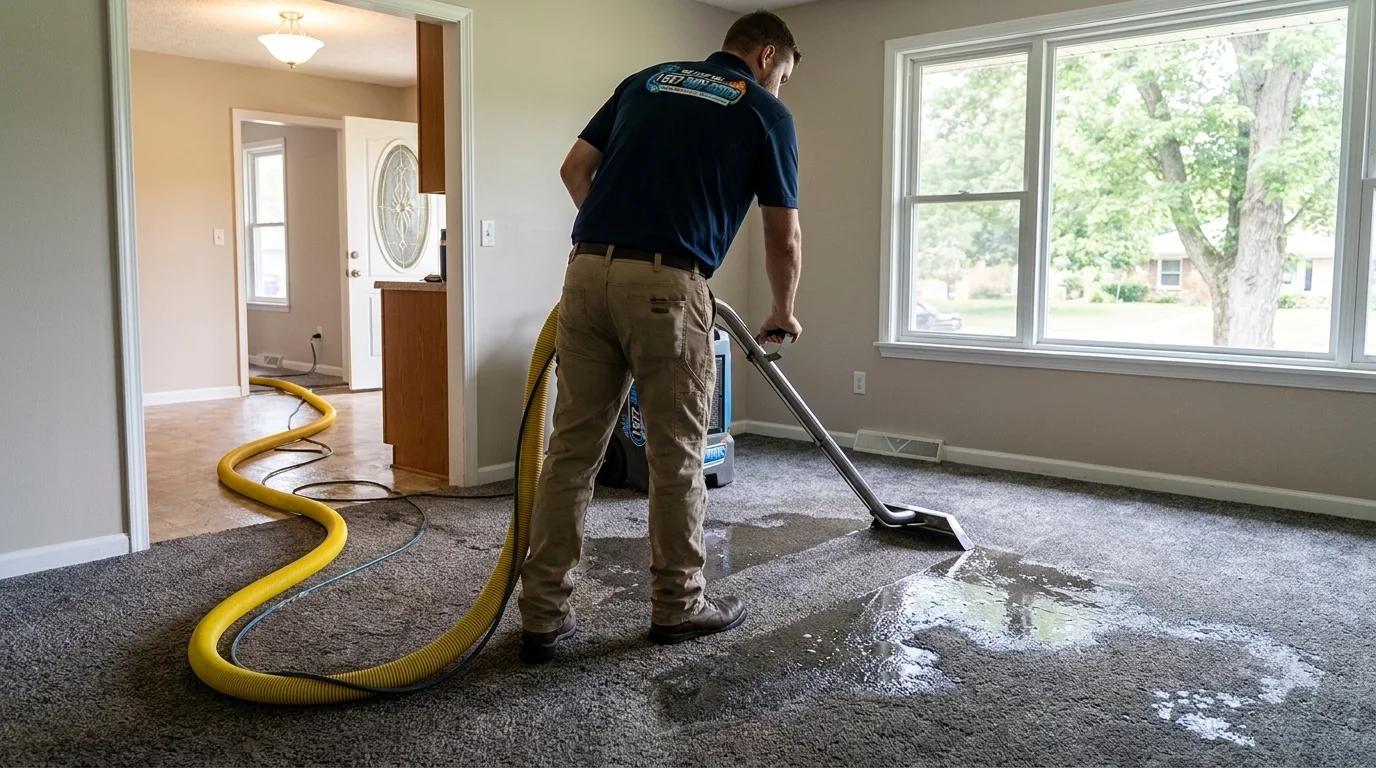
Extraction comes next. Truck-mounted and portable extractors pull standing water from basements and living areas. Then the drying phase begins in earnest: commercial-grade desiccant or refrigerant dehumidifiers are positioned based on the home’s layout, and high-velocity air movers are angled to direct airflow through wall cavities and under flooring systems. Moisture readings are logged at each visit so the drying curve is documented, not estimated.
If sewage contamination is confirmed, affected drywall, insulation, and flooring are removed to a clean line, bagged, and disposed of per Cook County guidelines before any drying equipment is set. Antimicrobial treatment follows extraction on all Category 3 losses.
Reaching Oak Park from Chicago
Dry Bros operates out of Chicago, and Oak Park is a direct run west on the Eisenhower Expressway (I-290), one of the more straightforward suburban reaches from the city. The village is compact, and most addresses are reachable from the I-290 exits at Harlem Avenue or Austin Boulevard within minutes of leaving the highway. We don’t publish a minute-guarantee for on-site arrival because conditions on the Eisenhower during a storm event vary, but Oak Park is consistently one of our closer western suburb calls.
Oak Park Insurance Coordination
Flood and sewer backup claims in Oak Park often hinge on a policy detail homeowners don’t discover until they’re standing in a wet basement: standard homeowners insurance typically excludes surface flooding and may require a separate sewer backup rider to cover drain backups. We document losses thoroughly, photographs, moisture logs, material inventories, and scope of work, in a format that insurance adjusters can work with directly. If your carrier requires a signed authorization or a specific form before work begins, we’ve seen most of them and can walk you through the process.
Local Note
Oak Park’s plaster-and-lath interior walls, common in the Craftsman bungalows and Prairie-style homes that define the village’s character, behave very differently from modern drywall when they get wet. Plaster itself can survive moderate moisture exposure if it dries quickly enough, but the wood lath behind it absorbs and holds water stubbornly. A wall that reads at acceptable surface moisture levels within a few days may still have saturated lath that won’t release for another week or more. Rushing the drying timeline in these homes risks trapping moisture that feeds mold growth inside the wall cavity, a problem that won’t show up until weeks later. We extend monitoring periods on Oak Park jobs specifically because of this construction reality.
If you’re dealing with flood damage in Oak Park right now, call Dry Bros at call us now. The longer water sits in a balloon-frame home with a masonry foundation, the more material is at risk, a conversation costs nothing and can clarify exactly what needs to happen next.
Flood Damage Restoration in Oak Park: Service Coverage
Frequently Asked Questions
How fast can you arrive for flood damage restoration in Oak Park?
Does Oak Park's combined sewer system affect how my flood claim is categorized?
My Oak Park home has the original plaster walls and hardwood floors, can they be saved after a flood?
Are homes in Oak Park's older residential neighborhoods more vulnerable to basement flooding than newer construction?
How does Dry Bros document a flood loss for an Oak Park insurance claim?
How long does flood drying typically take in an Oak Park home?
Flood Damage Restoration response in Oak Park
Most Oak Park calls see a technician on-site within 60 minutes from our Chicago headquarters.