Storm Damage Restoration in Evanston
Storm damage restoration in Evanston, IL. Insurance billing accepted. Call us now.
Our technicians are dispatched from our Chicago, IL headquarters and are typically on-site in Evanston within 60 minutes of your call.
Evanston sits at the edge of Lake Michigan, and that geography shapes every storm that rolls through. When a line of severe thunderstorms pushes in from the northwest or a late-season nor’easter stacks moisture off the lake, the result isn’t just wind and rain, it’s fallen tree limbs through rooflines, window failures in century-old brick two-flats, and basement drains overwhelmed by runoff that has nowhere to go on flat, clay-heavy soil. Dry Bros Water & Fire Restoration responds to that specific combination of problems, not a generic checklist.
Why Evanston Properties See Distinctive Storm Damage
Evanston’s housing stock tells the story. A significant share of the city’s residential buildings date to the 1890s through the 1940s, a period when balloon-frame construction was standard and rooflines were pitched to shed snow rather than resist lateral wind loads. When a severe storm drives rain horizontally, those older assemblies are vulnerable in ways that a 2005 suburban ranch simply isn’t. Flashing around dormers and chimneys degrades over decades; when it fails under storm pressure, water follows the framing cavity straight to the basement.
The soil matters too. Much of Evanston sits on glacial lake clay, dense, slow-draining material that sheds surface water quickly during heavy rain events. Storm runoff that can’t infiltrate fast enough pools against foundation walls, finds cracks that were dormant for years, and enters below grade within hours of a major event. That’s a different problem than a roof leak, and it requires a different response: not just drying the visible surface, but locating the entry point and addressing the moisture that has wicked into block or poured-concrete walls.
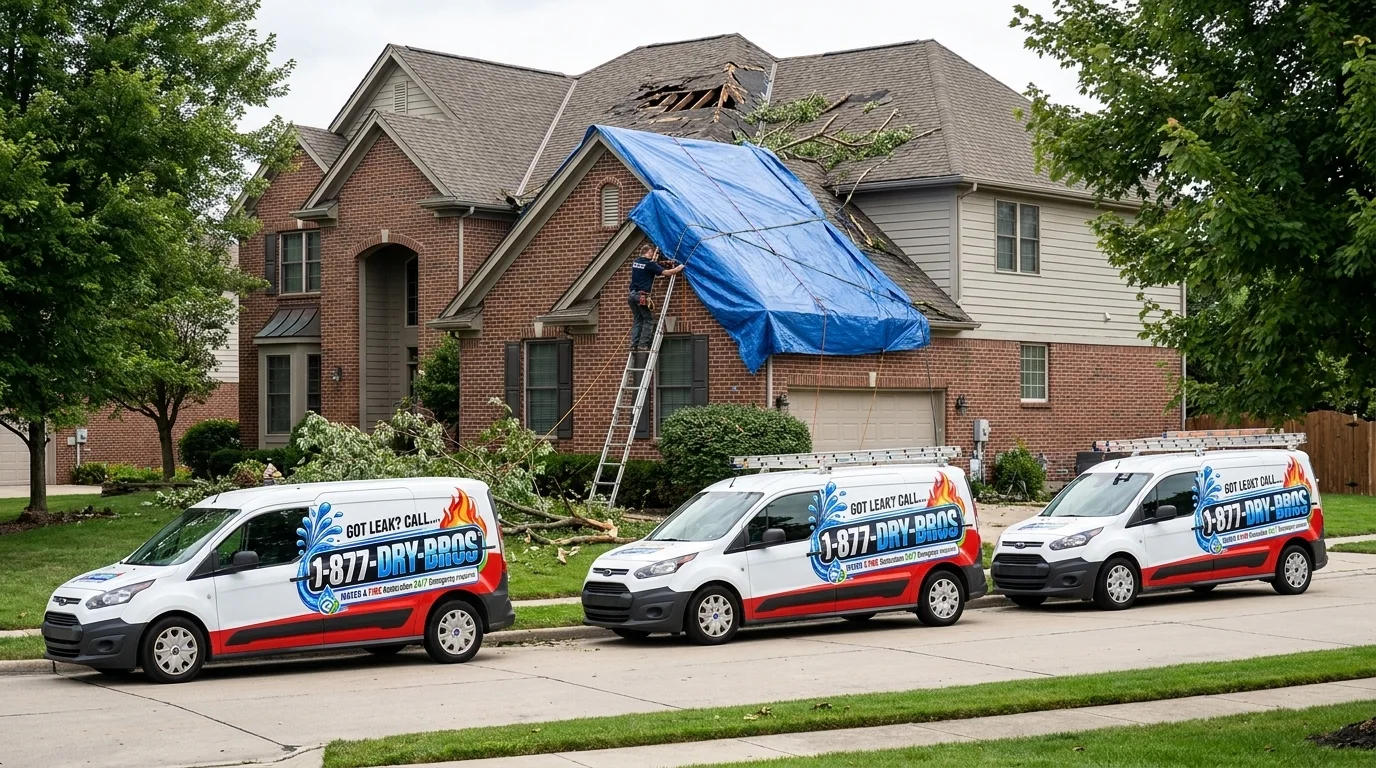
Large, mature tree canopy, one of Evanston’s genuine assets, becomes a liability in high-wind events. Oaks and elms that predate the neighborhood streets can drop limbs with enough force to puncture decking, shatter skylights, or compromise load-bearing rafters. Tree damage cleanup isn’t just debris removal; it’s assessing what the impact did to the building envelope before the next rain event compounds the loss.
Our Storm Damage Restoration Process in Evanston
The first step after a storm is stopping the bleeding. That means emergency tarping of any breached roof sections and boarding compromised windows before moisture has time to migrate deeper into the structure. In Evanston’s older homes, that window is short, plaster and wood lath absorb water faster than modern assemblies, and secondary damage accumulates quickly.
Once the building envelope is secured, the assessment phase begins. Moisture mapping with thermal imaging and calibrated meters identifies where water has traveled beyond the obvious wet spots. In a balloon-frame home, water entering at the roofline can track inside wall cavities all the way to the sill plate, a path that looks dry at every intermediate point until you probe it. Structural materials are documented, photographed, and categorized before any removal begins, which matters for the insurance claim that follows.
Drying equipment, industrial air movers and desiccant or refrigerant dehumidifiers, is sized to the actual affected area, not a standard package. In Evanston’s older plaster interiors, drying timelines run longer than in drywall construction because plaster releases moisture more slowly. Monitoring readings are logged daily until materials reach target values, and that documentation travels with the claim file.
Evanston Insurance Coordination
Most homeowners’ policies cover sudden storm damage to the structure, but the documentation requirements vary by carrier, and the line between a covered storm loss and a pre-existing maintenance issue is where disputes happen. Dry Bros photographs conditions as found, separates storm-caused damage from prior deterioration in the written scope, and produces the moisture readings and drying logs that carriers expect to see before approving structural drying costs.
Evanston also has a significant stock of multi-unit buildings and condominiums, properties where the HOA master policy and the individual unit owner’s policy may both be involved depending on where the damage occurred. Sorting out which policy responds to which scope is part of the coordination work, not an afterthought.
Local Note
In Evanston’s older neighborhoods, many homes still have original clay tile or cast-iron drain lines running from the roof downspouts into the municipal combined sewer system. During a major storm event, that system surcharges, pressure backs up through the very drains designed to carry water away, and basements flood from below rather than from above. If you’re seeing water coming up through a floor drain after a storm, that’s a sewer backup event, not a foundation leak, and it carries different restoration protocols and different insurance triggers than a standard storm loss. Knowing which type of event you’re dealing with shapes everything that comes next.
If a storm has left your Evanston property exposed, call Dry Bros now. The sooner the building envelope is secured and moisture mapping begins, the smaller the final scope of damage, and the smoother the insurance process.
Storm Damage Restoration in Evanston: Service Coverage
Frequently Asked Questions
How fast can you arrive for storm damage restoration in Evanston?
How quickly can Dry Bros reach Evanston from its Chicago base after a storm?
Evanston has a lot of older brick and plaster homes, does that change how storm drying works?
After a storm, my Evanston basement flooded through the floor drain, is that covered differently than roof damage?
A tree limb came through my roof during the storm, what happens before Dry Bros can start drying?
My Evanston condo has both an HOA master policy and my own unit policy, which one handles storm damage?
Will my homeowners insurance cover storm damage restoration in Evanston?
Storm Damage Restoration response in Evanston
Most Evanston calls see a technician on-site within 60 minutes from our Chicago headquarters.