Storm Damage Restoration in Naperville
Storm damage restoration in Naperville, IL. Insurance billing accepted. Call us now.
Our technicians are dispatched from our Chicago, IL headquarters and are typically on-site in Naperville within 60 minutes of your call.
Naperville sits squarely in the corridor where Great Lakes moisture collides with Plains air masses, producing the kind of fast-moving severe weather that can peel shingles, drop 80-foot oaks across rooflines, and push three inches of rain through a window seal before a homeowner can move furniture. When a derecho or a rotating supercell moves through DuPage County, the damage it leaves behind is rarely just cosmetic, water follows every breach, and what looks like a roofing problem at noon can be a saturated attic and compromised ceiling joists by nightfall.
Why Naperville Properties See Storm Damage Differently
Naperville’s housing stock spans several distinct eras, and each era carries its own vulnerability. The older neighborhoods closer to the downtown core, many with homes built in the mid-twentieth century, often have original wood-framed roofs with skip sheathing rather than modern plywood decking. That construction style holds up reasonably well under normal conditions, but when a storm drives wind-blown rain horizontally, gaps in skip sheathing give water a direct path to the attic insulation and ceiling below.
Newer subdivisions on Naperville’s western and southern edges were built during the 1990s and 2000s construction boom, when engineered lumber and composite materials became standard. Those homes tend to handle wind loading better structurally, but their larger footprints, expansive window packages, and complex rooflines, multiple valleys, dormers, skylights, create more potential leak points per square foot than a simpler ranch from 1962.
DuPage County’s clay-heavy soils compound the picture. After a heavy storm event, saturated ground can’t absorb additional runoff quickly, so water pools against foundations and works into basement wall joints. What starts as storm damage to the exterior often becomes a basement water intrusion problem within 24 to 48 hours.
Our Storm Damage Restoration Process in Naperville
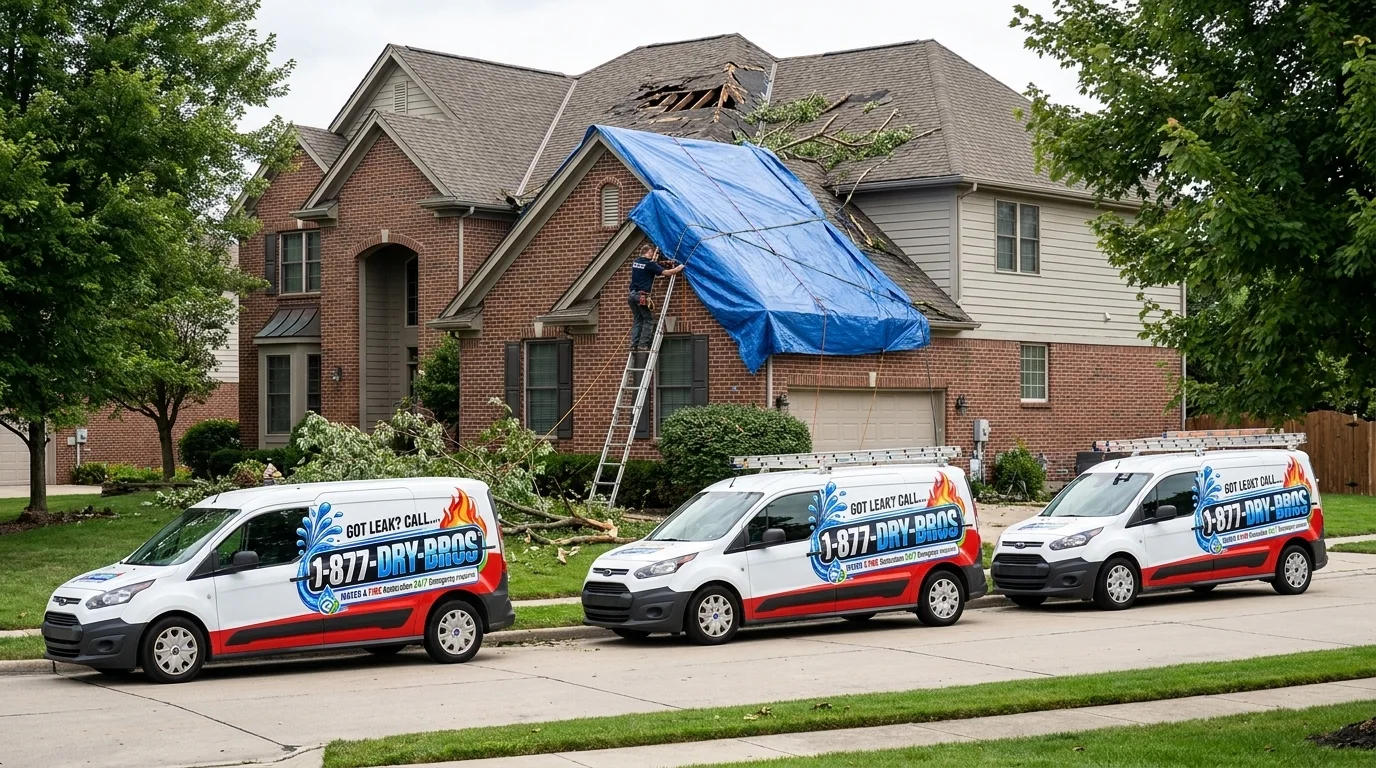
The first priority after any storm event is stopping active water intrusion before secondary damage compounds the loss. That means emergency tarping of compromised roof sections, boarding of broken windows or doors, and a rapid interior assessment to identify where water has already migrated.
Once the structure is stabilized, the process moves to documentation, systematic photography and moisture mapping of every affected area. Moisture meters and thermal imaging cameras reveal what the eye misses: water tracking inside wall cavities, saturated insulation above a ceiling that still looks dry, or trapped moisture under hardwood flooring that reads normal at the surface. Insurance carriers expect this level of documentation, and it protects homeowners from disputes over scope later in the claim process.
Debris removal follows, fallen tree limbs, damaged roofing materials, broken glass, before structural drying equipment is deployed. Commercial-grade desiccant dehumidifiers and high-velocity air movers run on a monitored schedule, with moisture readings logged daily to confirm the structure is drying to target levels rather than simply feeling dry.
Final repairs, roofing, siding, window replacement, interior finishes, are scoped after drying is confirmed, not before, so repair estimates reflect actual conditions rather than guesswork.
Naperville Insurance and HOA Coordination
Most homeowners’ policies in Illinois cover sudden storm damage, but the documentation burden falls on the policyholder to prove the loss. Carriers want to see the cause-and-origin relationship between the weather event and the interior damage, a photo of a missing shingle is not sufficient evidence that the water stain on the second-floor ceiling came from that specific breach.
Many of Naperville’s planned communities and newer subdivisions are governed by homeowners associations with their own requirements around exterior repairs. HOA architectural guidelines frequently specify approved roofing materials, siding colors, and even the type of temporary protective coverings allowed on a property during active restoration. Getting that wrong can mean a second repair after the HOA rejects non-compliant materials. Dry Bros coordinates with both the insurance adjuster and the relevant HOA before exterior work begins, so approvals and materials align from the start.
Local Note
One pattern that shows up repeatedly in Naperville’s established neighborhoods is the mature tree canopy, the city’s older residential streets are lined with silver maples and cottonwoods that were planted decades ago and have grown to significant size. Those trees are beautiful, but silver maples in particular are brittle-wooded and prone to large limb failures in straight-line wind events even when the trunk looks healthy. When a limb that size comes down on a roof, it rarely punches a clean hole, it drags shingles, tears gutters, and can crack ridge boards or rafters along a several-foot run. The visible damage at the point of impact is only part of the story; the structural assessment needs to follow the load path, not just the obvious breach.
If your home has taken storm damage, call Dry Bros Water & Fire Restoration at call us now. The sooner the structure is stabilized and water intrusion is stopped, the narrower the gap between what the storm damaged and what the repair bill covers.
Storm Damage Restoration in Naperville: Service Coverage
Frequently Asked Questions
How fast can you arrive for storm damage restoration in Naperville?
How quickly can Dry Bros reach Naperville from Chicago after a storm event?
Naperville's older downtown-area homes have original wood framing, does that change how storm damage drying works?
My Naperville subdivision has an HOA, do I need HOA approval before you start exterior storm repairs?
DuPage County soils drain slowly, can storm runoff cause basement damage even if my roof wasn't hit?
What should I do in the first hour after storm damage to my Naperville home before your crew arrives?
Will my homeowners insurance cover storm damage restoration in Naperville?
Storm Damage Restoration response in Naperville
Most Naperville calls see a technician on-site within 60 minutes from our Chicago headquarters.